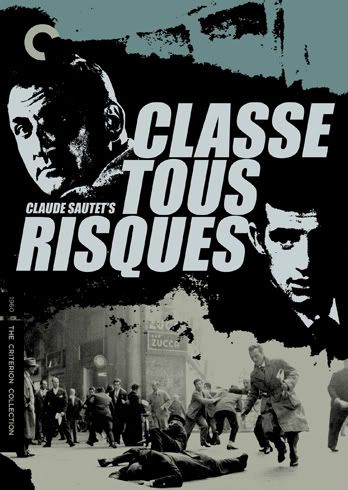
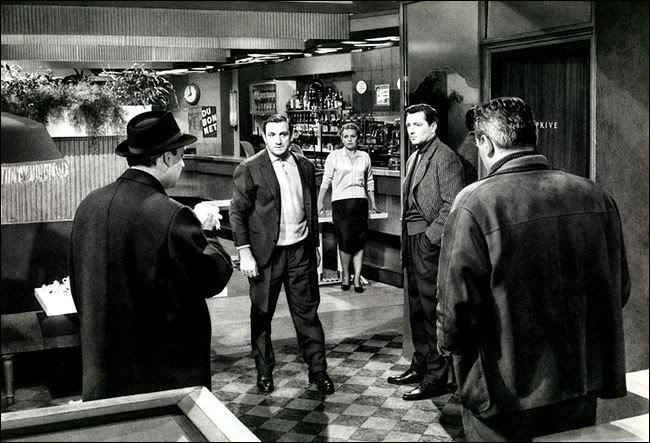
By Andrew ChanUntil recently, Claude Sautet’s Classe Tous Risques was a long forgotten noir relic. A commercial flop in its own country, it was only released briefly in the U.S. in a dubbed version called The Big Risk before it fell completely out of sight. But thanks to a Rialto Pictures re-release in 2005, and the attraction of lead performances from stars most consider among the immortals, it has the air of a major new discovery. Following hopeless fugitive Lino Ventura as he sneaks his way from Milan to Paris with wife and children in tow, Sautet’s first major film adopts some of the mood and energy from American crime movies but—like a handful of French films before and after it—tries to endow the genre with a conscience. Responsibility to friends and family humanizes even the most heartless, and Classe Tous Risques takes as its subject the masculine codes of honor that are upheld and broken by those who dare to live outside the law.
The rediscovery of Classe Tous Risques is, in a way, doubly special, as it leads us to reexamine the work of someone who is not an acknowledged master. Sautet’s career is notable for its lack of ostentation. Having begun as a highly respected assistant director in the ’50s, known for fixing the weak spots in a script and taking the reins from inept filmmakers (Truffaut once called him the “mender of French cinema”), he made a name for himself as a skilled and competent craftsman but not as an auteur. Against the two great superstars of the French New Wave, both of whom made their debuts right around the time Classe Tous Risques was released, he had neither the stylistic flair nor the youthful preoccupations to hold his own. What anchored his films was not the nouvelle vague’s cinephilia or ideology, but rather the ordinary human concerns he found at the center of big genre constructions like the criminal underworld or the comic ménage a trois. For him, even the fantasies of genre were subject to the cruel disappointments of real life.I can’t claim any special expertise on Sautet, having only seen the four titles (out of the 14 features he made) currently available on American DVD. But looking back at what I’ve seen of this unsung oeuvre, what strikes me are the affinities linking works as disparate as his first gangster film and the not-quite-romantic dramas for which he later became famous. Consider the lovely César and Rosalie, which was a hit for him in 1972, and the intriguingly understated, mostly unarticulated passion of Nelly and Monsieur Arnaud, which in 1995 became his swan song. Both films introduce an amiable, well-liked man in the autumn of his years falling in love with a young woman. Both are leisurely paced and visually sunny, but also characterized by midlife male frustration. This fascination with aging—with the male’s stumbling transition from one self to another, milder, less free self—can be found in Classe Tous Risques, where Ventura must face up to the responsibilities of a grown man just as the sins of his youth are catching up with him.
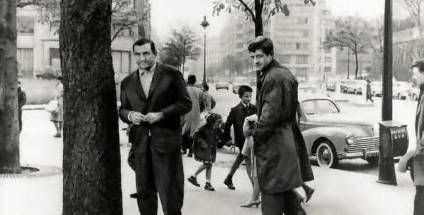
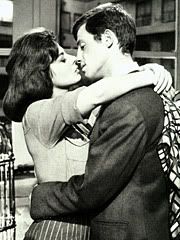
In contrast to the sympathy Sautet extends to the men in César and Nelly, the women (Romy Schneider and Emmanuelle Béart) remain about as enigmatic as the trio of female characters in Classe Tous Risques. Defined by the vagueness of their whims, they are gauzily emotional, steely and unknowable, as if Sautet were paralyzed by the thought of having to enter a woman’s psychology. Accordingly, the representations of and attitudes toward love in these films are uniformly ambivalent, and remarkable for being neither condescending to that emotion nor confined by its intensity. When Ventura—almost at the end of his rope—takes time to fall in love with some random chambermaid, the plot twist serves as nothing more than an evanescent moment of grace, requiring minimal dramatization and no further explanation. Even at the end, love is possible, though it is clear it won’t absolve anyone’s sins or compensate for the greatest human weaknesses.While Sautet’s films profess to be grounded in and conflicted over adult fears and dilemmas, there is still something inexplicably remote about them. In César and Rosalie, the lack of intimacy we feel toward the characters allows us to buy into the central love triangle’s frequent and absurd rearrangements. But in Classe Tous Risques’ case, this remove becomes an impediment, keeping the film just out of reach of the ranks of Touchez pas au grisbi, Rififi, and Bob le flambeur, even in the moments when it thrills and moves us. In the effort to avoid melodrama—a difficult act to pull off with those children in jeopardy—it sometimes feels stiff and stifled rather than suave. There is no scene here comparable to the grudging tenderness of Jean Gabin and his best friend sharing a hotel room, or the twinkle in Roger Duchesne’s eyes when he acts as a father figure to a duo of street kids—no scene that gives us a feel for the genuineness of the gangster’s heart of gold and the depth of his family crisis, while also revealing the thug’s capacity for brutishness.
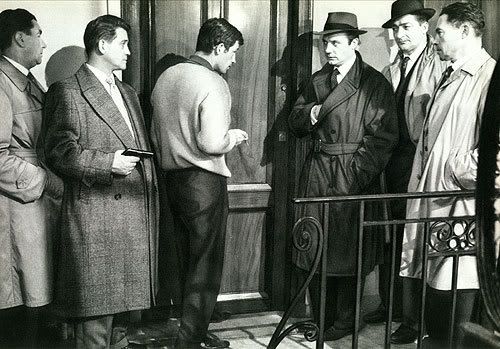
Ventura is great for his role and instantly relatable, his iconic face exuding more life-size decency than movie-size courage or charisma. But here he is largely incapable of communicating the sorrowfulness of a Bogart or the humor of a Gabin—qualities that make a cliché-ridden genre come alive with inner drama. It is Belmondo, with his mixture of toughness, seduction, and angelic innocence, who emerges as the film’s most alluring element, even as Sautet’s elliptical style keeps the character mostly inscrutable. As the hapless hero’s saving grace, Belmondo (fresh off a star-making turn in Breathless) offers the perfect foil to Ventura. More or less at peace with the contradictory extremes of criminal life, he’s as suave as any of the great men of noir, and separate from all the film’s middle-aged hand-wringing.Sautet’s vision was able to recognize human fragility without turning soft, and was willing to accept the ultimate dissatisfaction in relationships and social life. Where the rules of love fail the characters in Sautet’s later romances, the unforgiving nature of adult society and the irresoluteness of male friendship are what lead Ventura to his inescapable destiny. These darker, more personal undercurrents can easily go unnoticed when Classe Tous Risques is lumped with other pre-New Wave crime flicks, and when César and Nelly are marketed to appeal to the middle-brow tastes Truffaut famously ridiculed in his rants against “la qualité française,” along with the kind of movies that now get exiled to Blockbuster’s foreign section. If a director as subtle and sophisticated as Sautet still fails to inspire much excitement, it’s because he was always, in the words of Jonathan Rosenbaum, aesthetically conservative, even as he tried to breathe new life into tired old formulas. His Classe Tous Risques is not as cold-blooded or urgently told as the finest Hollywood noirs, or as boldly atmospheric as a Jean-Pierre Melville film, or even as entertaining as that wonderful Italian gangster comedy, Mafioso, just recently released on Criterion, which shares the same juxtaposition of the demands of domestic, private life with the relentless pull of the underworld.
But one trick that Sautet quietly pioneered in both Classe and his later romances is sure to leave a deep impression on anyone interested in taking a closer look at the parallels in his work. His great trademark is a harsh, clipped narrative brevity: deaths and separations and ends of relationships coming so unceremoniously, with so little fanfare, that they show us the swiftness with which life’s changes—and a film’s climax—can occur. In Sautet’s world, as in ours, people depart without warning, without proper goodbyes. And at the end of Classe Tous Risques, Ventura, too, has vanished like an afterthought of the camera, perhaps no luckier or more tragic than the rest of us.
Image/Sound/Extras: The Criterion Collection’s one-disc package boasts a typically beautiful transfer, as well as an impressive collection of excerpts from interviews conducted by French critic N.T. Binh. These include conversations with Sautet, who shares his early experiences in the film industry, and novelist and screenwriter José Giovanni, who relates the true story that inspired him to write Classe Tous Risques. Also included is an old interview of Ventura looking back on his career. Along with the highly informative essays in the set’s booklet—most notable of which is a tribute by Bertrand Tavernier, reminiscing on his double-friendship with mentors Sautet and Giovanni—these supplementary materials emphasize the close bonds forged during the filmmaking process, an insight that complements the film’s focus on the complicated loyalties of male relationships.
Andrew Chan is a poet and film critic currently studying at UNC-Chapel Hill. He is the creator of the blog Movie Love.
Tuesday, May 1, 2007
The Criterion Collection #434: Classe Touse Risques
The Criterion Collection #426: The Ice Storm
By Andrew ChanAs an NYU-educated Taiwanese filmmaker, Ang Lee seemed to make it clear with his 1992 debut that his concerns were both Eastern and Western. Only a few years on the heels of Amy Tan’s bestselling The Joy Luck Club, Pushing Hands and its commercially successful follow-up, The Wedding Banquet -- two films which were mainstream in their temperament, but bold in their bilingualism -- inserted themselves into an environment increasingly hospitable to Asian-American immigrant narratives. These first films were among the very few of their time that were interested in seriously examining the ways in which Chinese and Westerners interact in today’s world, and it is difficult to know what Lee could have contributed to the stunted development of Asian-American cinema had he mined this subject further. Instead of maintaining the intimate, personal tone of what would later be dubbed as his “Father Knows Best” trilogy, Lee went on to balance his first three modestly made Chinese-language films with three prestigious English-language ones, surprising viewers with how seamlessly he assimilated into a diverse set of quintessentially Western milieus. Some regarded his choice of material as if it were an astonishing stunt, because while Europeans from Fritz Lang all the way down to Milos Forman had experienced great success in Hollywood, no Asian director in history had ever even attempted to embrace Americanization on quite this level. Though Hong Kong’s Peter Chan (The Love Letter) and mainlander Chen Kaige (Killing Me Softly) have subsequently tried to pull off their own breakthroughs, Lee remains the only contemporary Chinese filmmaker to have integrated completely into the American movie industry.
Emerging just as the Taiwanese New Wave was making its greatest strides, inventing its own language, and committing itself to the exploration of national identity, Lee shed any association he might have had with the aims of his countrymen. He was either extremely wide-ranging in his genre tastes, or he was creating a career right out of a film-school textbook, aligning himself with Hollywood models such as screwball comedy (The Wedding Banquet), classy period pieces (Sense and Sensibility), and grim social satire (The Ice Storm). Though Lee’s work might seem too polite to be truly divisive, the path he has chosen has inspired varying reactions among critics in the U.S., a fact that has become more obvious with each new film he has made since the turn of the millennium. Among a growing number of American critics, the globalized nature of Lee’s oeuvre has been equated with a lack of coherent vision or distinctive style, those qualities supposedly necessary to any true auteur. Where once his versatility was mistaken for edginess (and seemed, at one point, to be unanimously praised), the way it has secured his Academy pedigree has come to mark him as a cultural dullard -- a fate sealed by the straitjacketed sexuality of Brokeback Mountain and the lukewarm critical response to his by-the-numbers Lust, Caution. Since the twin Oscar successes of Crouching Tiger, Hidden Dragon and Brokeback solidified his status as one of the few celebrity directors of his generation, detractors have been more emboldened to dismiss him as a mere craftsman, a symbol for the regrettable confluence of the arthouse market with safe, mainstream taste.
Lee is, by now, a naturalized American both legally and artistically. Could it be that by embracing the aesthetic traditions and social issues of this country, he has, to a certain degree, sacrificed public recognition as an “artist”? Does this response have anything to do with our current investment in the notion of national cinemas, or an underlying expectation that foreign-born auteurs should honor the responsibility of filming their native lands into being? And how much does our bestowal of the label “artist” rely upon our ability to imagine the director deeply enmeshed in (and personally implicated by) the cultural specificities of his material? In a globalized age, where the discussion of a movie’s nationality has become as much of a critical focal point as issues of authorship were at auteurism’s birth, it seems true that Lee fascinates us as someone whose body of work is most accurately described as international, or (perhaps in his estimation) post-“nationality.”In his second English-language film, The Ice Storm, Lee makes his most ostentatious claim to culturally specific insight on American life. But a decade after the film’s release (which was largely ignored at the box office and year-end awards), it still feels like the most mechanical exercise of his hit-and-miss career. Part of the failure must be attributed to the narrative itself, which follows the typical dysfunctions of unhappy suburban families in 1973 Connecticut. Heavy-handed metaphors, frequently banal observations, and a bogus denouement can be blamed on Rick Moody, who wrote the novel on which the film is based, and James Schamus, the long-time Lee collaborator responsible for the Cannes-winning screenplay. But there’s something additionally off-putting about the film’s determined frigidity, its lack of aesthetic personality. What we recognize as skillfulness in the directing lies in its leanness, in the sense that not a moment of storytelling is going to waste; where Pushing Hands was flabby and overextended, The Ice Storm shows Lee maturing in his craft and paring down his approach. But as interested as the film is in the domestic sphere as a stage for private humiliation, there’s very little inner life on display here, and not much moral or emotional riskiness. How could the Moody novel -- famous for being passionate, embittered, and semi-autobiographical -- have been rendered so bloodless on the big screen?
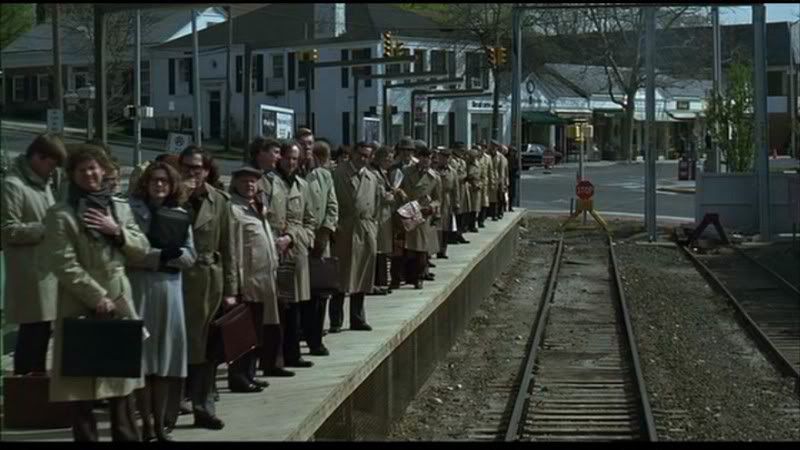
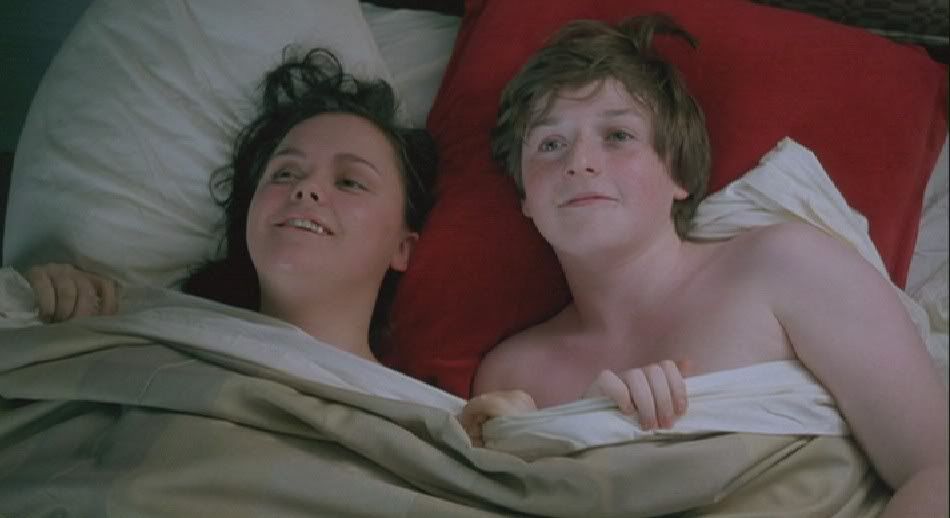
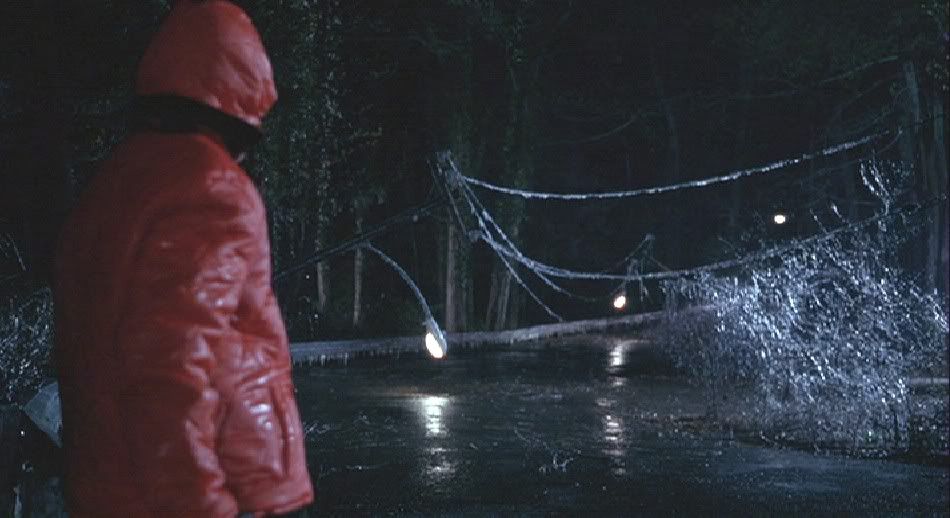
The Ice Storm tries its best to identity itself with the dark heart of the early ’70s; it has the look of Boogie Nights and Almost Famous with all the exuberance (including the songs) scoured out. But, more than anything, it is unmistakably an artifact of the ’90s, a trendy dissection of upper-middle-class American values that will forever be linked to more entertaining works such as American Beauty and the TV series Picket Fences. Hell-bent on exposing raging libidos and lonely hearts underneath all the good breeding, the film divides a cast of WASPy veterans and soon-to-be-famous young actors into two families, both plagued by midlife crisis, extramarital sex, and the trials of puberty. Structured to give full impact to Lee’s juxtapositions of the older and younger generations, the film shows adults scrambling to adopt the freedoms of the hippie movement, and ending up looking no more grown-up than their lonely, sexually experimental kids. Early exposition builds toward the film’s second half, which chronicles the disintegration of the characters’ personal and social worlds during a night of bad weather. Lee’s reversal of the “Father Knows Best” trilogy’s filially pious representations of its elders is tempered by a conservative, fire-and-brimstone approach to morality. In an embarrassing, climactic invocation of the mythic, Nature exacts atonement for sexual sin and poor parenting, and an innocent is sacrificed in order to reaffirm the love underlying all familial relationships.
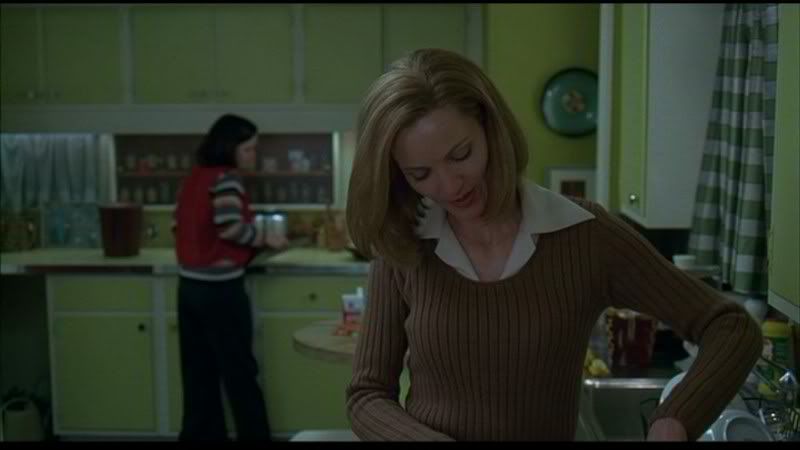
There is, admittedly, a certain beauty in the film’s pacing during its first half, in the matter-of-fact way it tries to inform us of the momentous transitions both the characters and the society are undergoing, and also in its avoidance of fetishizing period detail. But at some point the audience has the sensation of repeatedly being jerked forward and back. A framing device involving the Marvel comic Fantastic Four is introduced early on, rather heavy-handedly, only to disappear and then occasionally resurface for no apparent reason. The film’s social and political critique also falls by the wayside, relegated to brief glimpses of Nixon speeches on TV and fleeting mentions of Deep Throat, alternative religion, and the Vietnam War. Having eliminated almost every aspect that might be considered peripheral, Lee maintains a tight focus on the two families, and yet all of the characters remain emotionally mysterious to us. While admirers of the film usually point to the ensemble cast as one of its main virtues, it’s difficult to look past how the majority of the lead performances rely on the same tics and tendencies on which many of these actors have built their entire careers. In the roles of the wives, Joan Allen is frozen in the wounded sternness that has been her shtick for years, while Sigourney Weaver spends her scenes with her best mean face on, lips pursed, fumbling the delivery of her bitchiest lines. As the philandering husband, Kevin Kline puts so much effort into blending the comic and the tragic, the sympathetic and the repugnant, that he ends up a blur. The children turn out to be even harder to tolerate: Christina Ricci plays morbid and sardonic, Elijah Wood is doe-eyed, and Tobey Maguire unleashes the endearing, introverted nerdiness he would use in the Spider-Man movies. When the unsung Jamey Sheridan, as a bereaved father, finally beats the diva-thespians at their own game by delivering the kind of emotional authenticity that cannot be faked, it feels as if he has wandered in off another set.
In the late ’40s and early ’50s, the triumvirate of Eugene O’Neill, Tennessee Williams, and Arthur Miller depicted families going down in flames on a grand, tragic scale. American theater of that period set a new tone for the way we think about family dysfunction, producing what are still perhaps the nation’s most unsettling artistic explorations of the subject. Lee’s film is the aesthetic opposite of that tradition; austere rather than histrionic, self-consciously subdued rather than cathartic, its tone (not to mention its recurring train imagery) invites some viewers to make a false comparison to the serenity of Ozu. On the one hand, we can be grateful that The Ice Storm not only steers clear of what has become clichéd in great American drama, but that it also never falls prey to the irony that would make American Beauty so popular two years later (and would soon become the dominant tone for dark family portraits in American movies). In better hands, though, the film’s chilly disposition could have had the brutal yet poignant effect of Raymond Carver minimalism; instead it manages to make the clinical feel gratuitous, as if Lee were using Ordinary People as his model. In comparison to the warm humanism that characterizes the best of his work, the coldness immediately registers as an affectation, making the final plot twist’s attempt at tragedy all the more feeble and calculated.Though it’s impossible to know if the tepidness of this film has anything to do with Lee’s status (at the time) as a newcomer to America, one can’t help but note that its distance and disinterestedness fit alongside certain conceptions of that status. As in the work of another American-educated Taiwanese filmmaker, Edward Yang, The Ice Storm has an all-encompassing sympathy for both sides of the generational divide, a quality one might mistake for objectivity; what it lacks is Yang’s depth. Since he started making films in the English language, Lee has continually tried to disappear into his work, to render his own voice inconsequential -- an approach that flies in the face of auteurist values but is not, in itself, illegitimate. Despite this, it still seems that seeing America through the eyes of an immigrant should bring us some sort of new information about ourselves, new ways of evaluating our culture; at the very least, it shouldn’t make us even more bored of our own problems. But when the method is as culturally non-specific and stubbornly universalizing as Lee’s is both here and elsewhere, we end up reverting to the same old clichés about America, the world, and human nature.
Images/Sound/Extras: While The Ice Storm may not warrant Criterion canonization (the cover goes so far as to proclaim it “one of the finest films of the nineties”), the new two-disc set makes the best possible case for the film in its extensive and informative supplemental material. Lee is not known for his electrifying personality, but the extras reveal his interesting and conscientious mind for cinema. A commentary featuring Lee and producer-screenwriter James Schamus begins with a good-natured “fuck you” to the question of how a Taiwanese director can make a movie about Americans. The lively discussion gives fans a chance to listen to their friendly rapport, which has been the basis for one of contemporary cinema’s most successful and enduring film collaborations. Other features include deleted scenes; a documentary of (mostly dull) reminiscences from the cast; interviews with the cinematographer, production designer, and costume designer; and a recent conversation between Lee and Schamus at New York’s Museum of the Moving Image. All this, in addition to an excellent transfer and Criterion’s best cover design so far this year, makes for a handsome (if not quite extraordinary) set.
Andrew Chan is a poet and film critic currently studying at UNC-Chapel Hill. He is the creator of the blog Movie Love.
The Criterion Collection #422: The Last Emperor
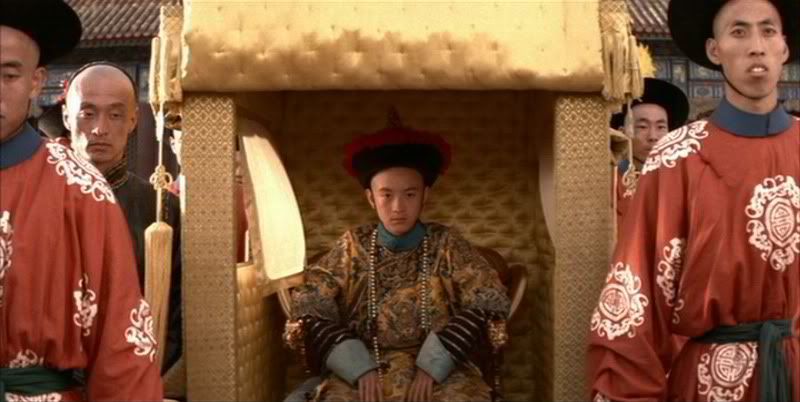
By Andrew ChanBefore the average person could afford to travel by air, movies were the most viable form of transportation. Audiences were stunned by how this new medium could convince the eye it was having an intimate encounter with a corner of the world previously inaccessible. It is dismaying, then, to realize that a certain stock of images have always dominated cinema history, and that the art form so rarely lives up to its capacity for introducing new sights and sounds to our worldview. In the 1980s, when the Chinese government granted Bernardo Bertolucci unprecedented access to the Forbidden City, an entire nation that had been ignored in popular world cinema suddenly became a new frontier for Western viewers. The promise of the project must have seemed overwhelming: at a time when good old camp like The Good Earth and Shanghai Express were still Hollywood’s paradigmatic depictions of the country, here was the most sensual of European masters taking on the role of a modern-day Marco Polo. He would come back to share with us treasures that had never appeared before on a movie screen. When the resulting achievement, The Last Emperor, became an international hit and a whirlwind success at the Academy Awards, it was a breakthrough for Chinese images in Western cinema. But behind the silk veils and looming structures of Bertolucci’s biggest blockbuster remains one of the strangest mainstream epics imaginable, a film that wears its compromises of style and perspective on its sleeve.
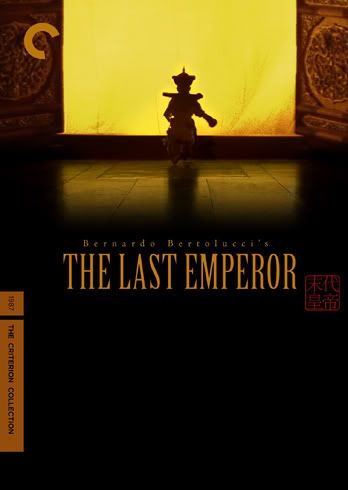
Following the life of Pu Yi, who ascended the throne at the age of three, the film’s structure shifts back and forth from his early days as a purely symbolic ruler to his gradual movement away from the palace and later imprisonment in a Communist reeducation center. Doted on since infancy by eunuch servants who obey his every command, Pu Yi learns to live a life of seemingly unlimited privileges, but realizes he is trapped when he cannot even leave the grounds to mourn his biological mother who has died beyond the palace walls. Having never been instilled as a youth with any values other than that of his own (ultimately hollow) importance, he grows into little more than a marker of the times, a vessel for the ideologies he assumes in order to stay in power at least in name. He eventually falls prey to Japan, which establishes him as ruler of the puppet-state Manchuria.
The challenge of the film is to dramatize the struggle of a man who has little courage or wisdom to impress an audience, a man who was revered in his own cocoon-like remnant of China’s dying feudalist system, and who had only ever possessed the mere image of authority. Bertolucci doesn’t paint a portrait of a sympathetic or passionate person, so he is lucky to have chosen John Lone as the leading man. Playing Pu Yi from young adulthood to old age, and aided by some expert and subtle makeup work, Lone delivers the film’s most emotionally resonant performance by making variations on an unwavering emotional monotone. With more resignation than externalized despair, he manages to shape a character of compelling humanity and compromised dignity, communicating through perfectly maneuvered facial expressions (wounded but never pitiable).The title character is a cipher, but the restrained elegance of Lone’s interpretation helps anchor a film that insists on virtuosity on every sensory level. From the moment it enters the Forbidden City, the film dares us to take in all the beauty Bertolucci has laid out for us. It is as if he believes these long-storied palaces and courtyards were constructed for the sole purpose of being filmed by him. But The Last Emperor is not only a magnificent example of location shooting; it also counts as one of the great collaborations of cinematographer, art director, and costume designer, that relationship which has always been holy in the tradition of epic filmmaking. This is lavishness that doesn’t normalize; there is always something new to be awed by, which may be compensation for the absence of other traditional epic tropes that hook a viewer. There is no sweeping romance to speak of here, and the sex in the film is a collection of recycled gestures from The Conformist. Nor is there any suspense to relish in the film’s political intrigue, nor the epic’s usual expansive sense of space in the sets’ imprisoning enclosures.
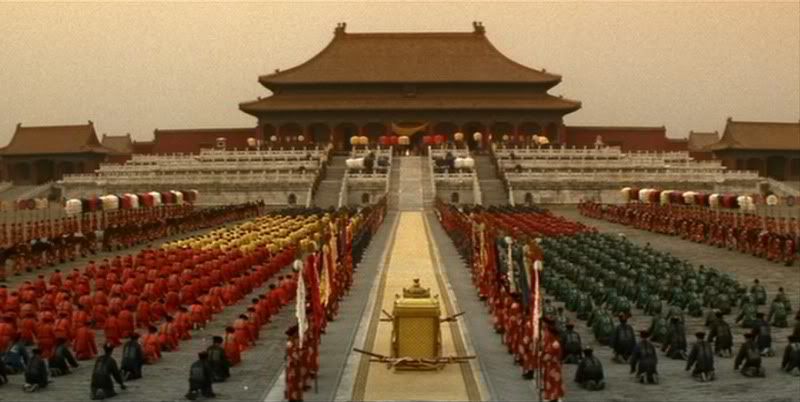
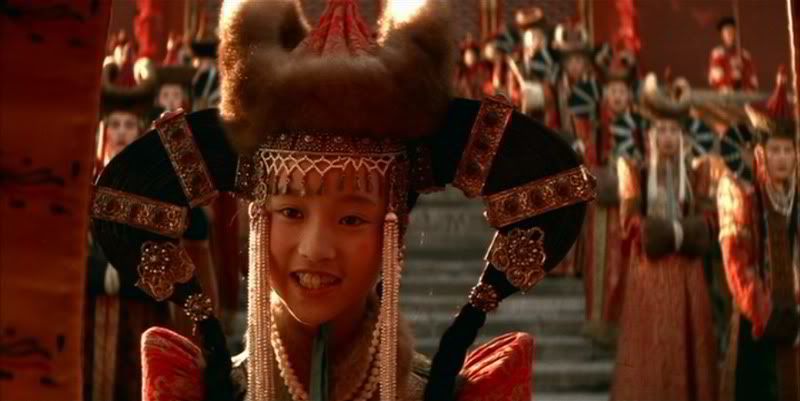
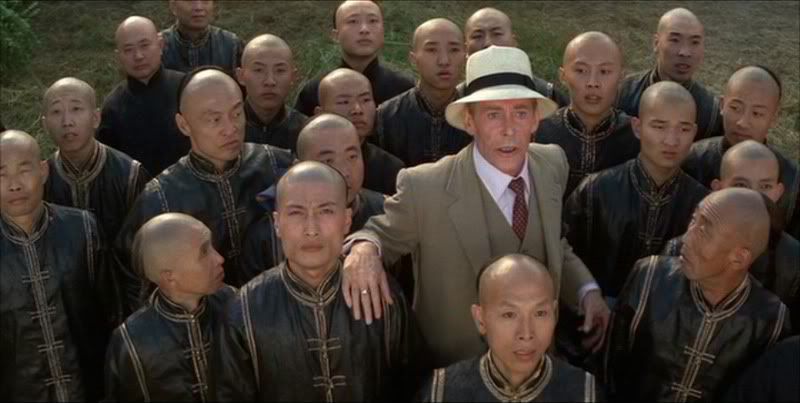
Banking on keeping the audience’s attention with the newness of its images, The Last Emperor is caught in the awkward position of having to reconcile its orientalist curiosity with its historical reverence, its markedly Western perspective with its desire to immerse audiences in authentic details of an insular world. What results from Bertolucci grafting his European sensibilities onto these Chinese landscapes? First off, it’s important to discuss the disorienting effect of having a predominantly Chinese cast deliver dialogue almost exclusively in English—an issue that is easier to raise now that a number of recent, popular American movies have been made in foreign languages (Letters from Iwo Jima, The Kite Runner). This choice emphasizes the alien quality that Bertolucci surrounds his characters in; for instance, the youngest versions of Pu Yi that we encounter in the film sound downright supernatural when they open their mouths and deliver the script’s stilted lines in vaguely Chinese-American accents. The strategy is full of pitfalls, and the wheels seem to come off completely when the emperor’s Scottish tutor arrives and, suddenly, the adolescent Pu Yi’s English becomes shakier as if to remind us that this is not his native language. But where a film like Memoirs of a Geisha was offensive for its substitution of Japanese with broken English, The Last Emperor is uncomfortable with a purpose, as it constantly keeps us aware that this interpretation of history is being translated through an outsider’s lens. At the same time, though, this reading of the film reveals one of the deepest flaws in screenwriter Mark Peploe’s writing: rarely escaping the caricatured cadence of their speech, all his characters remain merely conceptual and almost indistinguishable from each other in personality.Language is only one factor in the film’s negotiation of East and West. That struggle is embedded in Bertolucci’s exoticizing gaze, which never fails to relish the details of palace customs, such as a turtle swimming in a bowl of soup or a dance by Tibetan lamas. It is not Bertolucci’s goal to get us acclimated to our surroundings; at times, the Forbidden City is shot like a busily designed sci-fi/fantasy set, turning foreign style into gaudy artifice. But this is a film that makes a case for the exoticizing gaze as a mode native to the movie camera, and for exoticism as a natural interest of the cinema, insofar as the act of filmmaking is tied to the creation of spectacle. In its position in the chronology of film history (predating Zhang Yimou’s 1990 Ju Dou, the first mainland Chinese film to be nominated for a foreign-language Oscar), there is no way for The Last Emperor to dissociate from notions of the “exotic.” But the perspective from which it regards the Forbidden City seems accurate not only to the way foreigners would view it, but also to the way Chinese people are encouraged to view their own history—as a tourist attraction or amusement park—in the wake of headlong modernization. The changes that have occurred in twentieth-century China have occurred at such a speed that it is impossible for the splendors of the past to appear anything but alien to the contemporary experience. In the end, it is a double-edged sword that the film keeps the beast of Chinese history (rather than East-West relations) at the center of its attention. While this focus is a rare achievement for Western cinema, it also seems to have struck fear in the screenwriter, who seems intimidated by his own material, or by all the visual magicians bringing it to life along with him. Instead of offering us some much-needed characterization, Peploe substitutes the kind of existential numbness he brought to Antonioni’s The Passenger.
The Last Emperor stands alongside Richard Attenborough’s Gandhi as a hugely popular ’80s film by a Western director in awe of Asia. Both of these biopics (and their runaway Oscar success) constituted a new kind of prestige picture, one that stroked the viewer’s self-regard by having him re-embrace the outside world but that also encouraged an aloof reaction with an enigmatic figure at its center. That Bertolucci’s film has always been the superior work is not only due to the visual genius on display in every frame. It is also because, in the end, it claims no authority over the history and culture it shares with us. Skimming the surface of the mind-boggling complexities of Chinese history, The Last Emperor can be both criticized and praised for the dissatisfaction it leaves in its audience. This is a film that seeks to engage that suspension of belief required by the most radical social upheavals, to inhabit that liminal space of historical transition. So perhaps it is right that Bertolucci would plant us behind a gauzy curtain rather than on the solid ground of the straightforward epic—even when such honorable distance is at times the film’s undoing.
Image/Sound/Extras: It would be hard to imagine a more satisfying treat for a Last Emperor and/or Bertolucci fan than Criterion’s new four-disc package. The company has outdone itself with a level of meticulousness and generosity rarely lavished on a single movie, and it’s difficult to think of a film more appropriate for such a comprehensive treatment. Despite being deeply flawed, Bertolucci’s most widely seen film deserves our continued attention and fascination for the ways in which it foregrounds almost every element of old-fashioned movie magic. Encountering the film in this beautiful edition, one is left with little question as to how it swept all the technical Oscars of its year.Two major issues surround this release. Disc 1 presents the 165-minute cut seen in theaters in 1987, while Disc 2 offers the television version (which is 53 minutes longer). In a statement on the Criterion blog, the DVD’s producer, Kim Hendrickson, corrects the assumption that the TV version is the “director’s cut” (as it has been promoted on the previous Artisan DVD) and shares a correspondence with the director in which he admits to finding the longer cut “not much different from the other one, just a little more boring.” The TV version was originally completed to fulfill a contractual obligation, but Bertolucci has always considered the theatrical release as definitive. Evaluating the two versions side by side, though, reveals what several critics (including myself) have felt: that the longer cut is the richer experience. While it doesn’t add much in terms of narrative (except for additional prison scenes and one minor character) or historical depth, it smoothes out many of the transitions that seem jerky in the theatrical version, and makes certain scenes more resonant simply by extending them.
The more controversial point that must be raised about this DVD regards the involvement of Storaro, who overlooked and approved the transfer. As has been discussed in detail already on a number of DVD review sites, the cinematographer has tried to unify the aspect ratios of his films with the 2.00:1 format Univision, which he devised in 1998 out of fear that his images would be compromised on TV screens. I have not been able to compare Last Emperor’s original 2.35:1 frame with this cropped version, nor do I consider myself a strict purist, but—as many film enthusiasts have noted—home viewing has changed a lot in the decade since Storaro raised his concerns. That this legendary cinematographer (certainly one of the cinema’s great living visual stylists) would retroactively mutilate his own compositions is not a choice easily sympathized with, even if his Univision format once seemed a practical solution to a real problem. However, according to Criterion’s most recent statement on the issue, the original aspect ratio was wider than intended, and 2:1 was always Storaro’s ideal. The cropping isn’t likely to distract most viewers, though, since the image quality on Disc 1 seems to me almost flawless (though it is considerably grainier on Disc 2), and the transfer is a vast improvement on the abysmal Artisan release that has circulated since 1999.The last two discs compile an overwhelming array of supplemental material, which together work to dramatize the process of epic filmmaking to greater effect than almost any other set of DVD features I can think of. Four lengthy featurettes cover a wide terrain. "The Italian Traveler" engages Bertolucci the visionary, featuring him philosophizing on the voiceover, and chronicling his movement East after his proposed adaptation of Dashiel Hammett’s Red Harvest fell through. Two other hour-long documentaries (one produced by BBC) follow the making of the film and offer some incredible behind-the-scenes moments, including footage of Gabriella Cristiana discussing editing choices with Bertolucci. The most recent of the four featurettes is a new collection of interviews with the film’s cinematographer, art director, costume designer, and editor, reminiscing in great detail on their Oscar-winning labors. Rounding out the set is a preproduction video of Chinese locations, which gives viewers a portrait of the country as it looked in the late ’80s, and a handful of interviews that provide insight into the historical background and the artistic process behind the film.
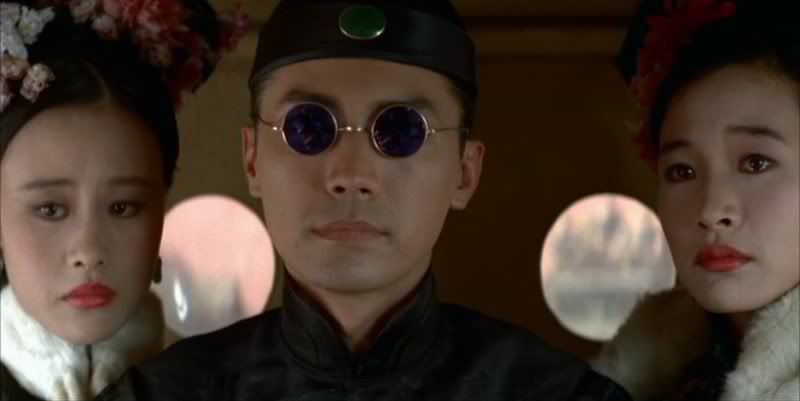
One of the treasures of this set is a commentary featuring Bertolucci, Jeremy Thomas, screenwriter Mark Peploe, and composer Ryuichi Sakamoto. Running the entire length of the theatrical version, the talk could easily have become boring, but the reminiscences from all participants are instead uniformly entertaining. Another gem in the box is an elegant 96-page booklet, with David Thomson’s astute appreciation of the film as exemplary “tourist cinema,” a brief but deeply felt Film Comment article written by Bertolucci, interviews with Ferdinando Scarfiotti and actor Ying Ruocheng, and a piece by Bertolucci’s personal assistant, followed by his shooting diary. What is extraordinary about Criterion’s work here is that the wealth of extras does not overwhelm or overstate the value of The Last Emperor. Instead, it elaborates on what is indisputably brilliant and interesting in the movie (its visual splendor; its reflection of a certain historical and aesthetic moment), and offers a balanced portrait of a kind of filmmaking that is both auteur-driven and highly collaborative.
Andrew Chan is a poet and film critic currently studying at UNC-Chapel Hill. He is the creator of the blog Movie Love.
The Criterion Collection #420: Le Bonheur
By Andrew ChanShortly after making a then-controversial but now little-seen gem named Le Bonheur, Agnès Varda wrote that she had envisioned the film as “a beautiful summer fruit with a worm inside.” More than forty years later, one hears in this statement echoes of Buñuel’s anti-bourgeois perversity, Sirk’s subversion of lush surfaces and narrative clichés, as well as the basis for a whole tradition of American films (exemplified by David Lynch on one end and American Beauty on the other) that claim to expose the demons lurking behind the white picket fence. Then and now, there is a great pleasure in watching forces of chaos and insanity eat away at the glamour of cinema. When Le Bonheur (meaning “happiness”) opens to the carefree strains of Mozart and images of sunlight, sunflowers, and family members hand-in-hand, the contemporary viewer is immediately clued into the joke, having been taught by years of hyper-ironic filmmaking to respond to these symbols with scorn. We can already guess the film is about the tyranny of eternal happiness. What follows is, indeed, a story that demolishes the initial portrait of domestic bliss, replacing it with a version that is cruel and animalistic. But the predictability stops there. The power of Varda’s film is that it remains startling even in our savvy era, leaving us as uncertain and suspicious of its intentions as its first audiences must have been.
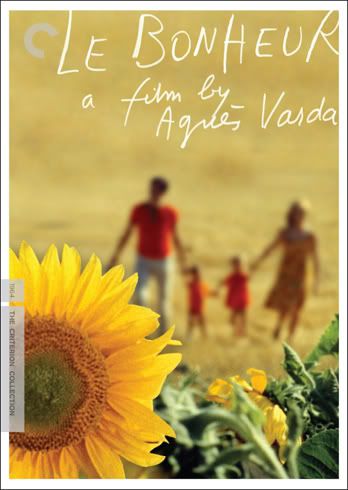
Like the title character of Varda’s 1985 film Vagabond, husband-father-philanderer François (Jean-Claude Druout) disregards the codes that dictate how life should be lived in Western society; the crucial difference here is that he inhabits a world of his own making, and is therefore free from being victimized for his behavior. Early scenes show him frolicking through nature with his two unnaturally obedient children, and sometimes making love to his beautiful wife on a blanket in the grass. When he falls for another woman, he does so with the innocent affection of a boy. He discovers, to his delight and convenience, that the adulterous affair enhances rather than detracts from his marriage, and he expects his wife to approve of the new circumstances. “Happiness works by addition,” he explains. If she is devastated by his admission, you don’t see it for a second on her face; love continues without question, at least until the plot twists toward an inevitable but ambiguous tragedy.Part of the shock of the film is the insular space in which this cruelty occurs. There is no one to condemn François for his charmed life; only we, the audience, can submit an objection. The film buries the rules of moral society so deep within itself that it relies on us to provide those reference points, even as it gets in the way of our doing so. Varda performs a high-wire enactment of the egotistical, patriarchal psyche, taking the world exactly for what it is in the man’s imagination, and unifying so thoroughly with his perspective that his selfishness becomes all the more disturbing. Despite its resolutely sunny disposition, the film—interpreted as pure satire—is as acidic as anything by Catherine Breillat in its depiction of male-female romance, and as delirious in its mixture of sexual openness and sexual humiliation.
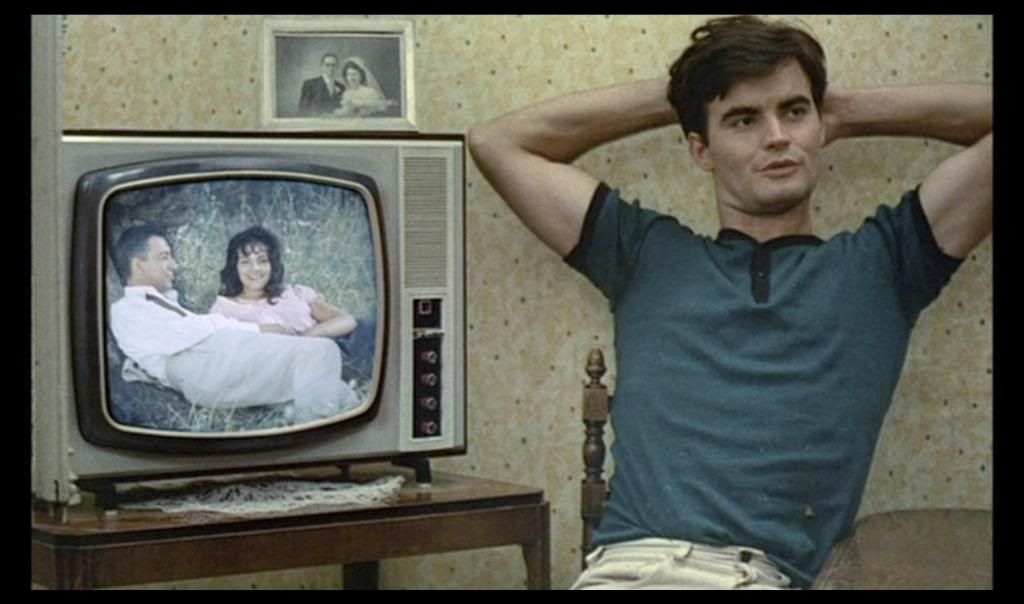
But art fueled by contempt alone is likely to run out of steam and, for this reason, what we first see as Varda’s unremittingly ironic tone always threatens to get heavy-handed. To fully appreciate how daring Le Bonheur is, we need to accept that our reading of the film as ironic is, in part, a partisan reaction, one that aligns with a certain side in the ongoing war of sexual mores. Yes, the film is an obvious attack on gender norms that discourage women from voicing their opinions and contradicting men’s desires; Varda sets up a masculine paradise in which lust and love have no emotional consequences, and asks us if we find it desirable. But in the peak decade of the sexual revolution, could she have meant at least some of her questionably utopian vision sincerely? Is François an unexpected hero, a man we should admire for being honest and unembarrassed with his desires? There is no way we can react to the ideal or nightmare presented in the film without revealing our own feelings on the current fads of sexual liberation, on polyamory in particular. But to really engage with the film’s ideas on love, sex, death, and family, we have to entertain the possibility that this version of paradise might somehow, in fact, be desirable. We might ask: If traditional notions of nuclear-family happiness are illusions anyway, then why should the idea of open marriages be so offensive to us? If we recognize that the messy nature of love has been obscured by our overly romantic expectations, then why is it so difficult to accept that multiple, simultaneous loves might be as sustainable as monogamous ones? Are our deep emotions and commitments just falsehoods we use to maintain the artificial separation between the human and the animal?Even as Varda has us consider such questions, her conclusion about this exclusively male fantasy is clear. Whether we view Le Bonheur as dystopian (because its women are interchangeable and disposable) or utopian (because it embraces the full range of human beings’ unpredictable impulses) may, in the end, be immaterial. The film constructs an Eden, a world pre-shame, in which an individual’s feelings are wholly legitimate and never clash with those of anyone else. Varda establishes a vital link between morality and emotion, but the world she has created exists outside of both, and therefore outside reality. One of the most fascinating conflicts that arises in Le Bonheur (a film essentially about denying the existence of conflict) stems from the audience’s unshakable uncertainty of how to apprehend this self-conscious dream world. The film plants itself firmly in the leading male’s psychology, but it never exists in actual (rather than merely conceptual or symbolic) space. The characters are cardboard cutouts who never breathe, let alone choose, for themselves. At times, before its devastating cumulative effect sinks in, the film strikes one as stalling at the level of experiment, never quite making successful art or argument. But what consistently surprises is that, even through Varda’s caked-on style, François’ behavior still manages to unsettle us.
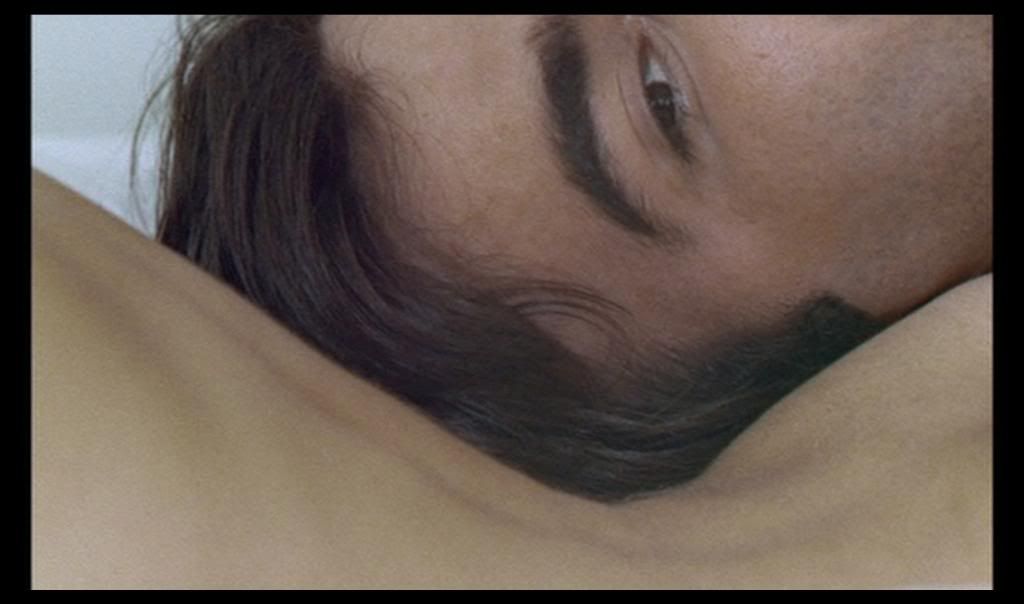
Le Bonheur emerges as a harsh critique of free love, as well as an empathetic exploration of its allure. The film’s visual splendor is both celebratory and elegiac. In Varda’s eyes, nature turns hideous, just like those feelings that (however “natural” to us) reveal our inhumanity. Varda knew something about the eye-candy of Technicolor (as perfected by her husband Jacques Demy in The Umbrellas of Cherbourg) and the soft, nostalgic palette of Impressionist painting, both of which she approximates in Le Bonheur’s cinematography. She knew those colors, like happiness itself, could never escape a look of fragility and impermanence: the sense that, with just a bit of rain, they would all wash away.Le Bonheur may be numbered among the many precursors to radical works such as Blue Velvet and Fat Girl, but Varda’s film is moving in ways that a Lynch or Breillat could never be. Even the best of contemporary art dealing with the horror of the quotidian is usually snide and self-congratulatory, and never dares to confront the sweet emotions that can lead us to unintended cruelty, or the ingenuousness with which we harbor our most selfish desires. That good can produce evil, and that the beautiful coexists with the terrible, are facts that the typical movie (at most) only pays lip service to. Varda doesn’t deploy her stylistic audacity in order to disguise a lack of nuance or ambiguity. Even in a film as radically stylized as this, she lets all paradoxes stand so that the most improbable idyll becomes a mirror for our most complicated realities. The summer palette and sunflower imagery might scream irony at first, but it’s not the kind of eye-rolling sarcasm that you can trust or participate in. Instead, it’s disorienting, a trapdoor that opens onto a profoundly uncomfortable moral dilemma.
Image/Sound/Extras: Perhaps the least-known of the four films in The Criterion Collection’s 4 by Agnès Varda, Le Bonheur comes to us in vibrant color, gorgeously restored; as we learn from one of the disc’s many supplements, the film had to be reconstructed because the 1963 Eastman negative had gone completely pink and beige. According to Varda, who makes several charming appearances throughout the box-set and is listed as “Consulting Producer” in the DVD credits, this version looks identical to the original.Two featurettes consist of reminiscences by the cast on the film's production and reception. In an interview with the lead actresses Claire Drouot (the real-life spouse of Jean-Claude Drouot) and Marie-France Boyer, we learn some heartfelt, down-to-earth lessons on matrimony. Drouot, who after almost 45 years is still married to the film’s star, offsets Le Bonheur’s sharp satire with some practical advice: “There’s no user’s manual. [Marriage is] a craft, it’s like knitting. You take two needles, and you knit. That’s all.” In another short piece, Jean-Claude Drouot—now scruffy, broad, and deep-voiced—returns to the setting of Fontenay-aux-Roses in southwestern France to speak with locals who remember witnessing the film in production. Also included in the package is some black-and-white TV footage chronicling the making of Le Bonheur, during which we catch a glimpse of Varda in the director’s chair sharing a few words with her husband, the great Jacques Demy.
Perhaps the most interesting extra feature is a 15-minute discussion among a diverse gathering of French intellectuals who either remember seeing the film upon its release or have just encountered it recently for the first time. The comments are not always enlightening, but their exchanges evoke a time and culture in which art films were seen as instigators of philosophical discussion. It is surprising to hear some suggest that Le Bonheur is not a completely mordant comedy, and that it might have its share of genuinely utopian values.
Most inconsequential and irrelevant among the extras are two shorts on the general meaning of happiness, in literary history and on the streets of contemporary France. Most valuable, by far, is the inclusion of Du côté de la côte (1958), Varda’s wonderfully cheeky 25-minute travelogue of the French Riviera. Along with 2000’s The Gleaners and I, this short demonstrates Varda’s gift for inserting playful imagery into a genre as traditionally sober as the documentary. The film, like all her best work, shows her preference for a complex, pliant tone that can express her whimsy, outrage, and melancholy.
Andrew Chan is a poet and film critic currently studying at UNC-Chapel Hill. He is the creator of the blog Movie Love.
The Criterion Collection #419: La Pointe Courte
By Andrew ChanIn the first shot of Agnès Varda’s La Pointe Courte, the camera travels down a corridor in a small fishing village on the Mediterranean coast, brushing against the hanging laundry and peering into open windows. The first several scenes are spent getting acquainted with the town, the difficult work the inhabitants engage in everyday, and the little tragedies befalling them that they accept without melodrama. Soon a couple in urban dress drifts into the frame. We see them from the back at first and then from the front; they are silent at first but then, all of a sudden, extremely talkative about the problems that plague their young marriage. The man (Philippe Noiret), who grew up in la Pointe Courte, is satisfied with the relationship, but the woman (Silvia Monfort), a Parisian, craves something else that she cannot define. As sorrow piles on top of sorrow, the film maintains its surpassingly gentle touch, lightening the mood at times with whimsical music or an eccentric detail. Moving forward and pulling back, it travels between the worlds of the villagers and the spouses, and keeps them separate until a final sequence gathers everyone at the town’s ritual jousting match.
Using this two-stranded pattern, Varda weaves together a film about the communal voice that forms among people—not just the largely anonymous villagers, but also the individualized spouses, who are bored with the intimacy and familiarity that has them speaking each other’s sentences. Knowledge is the other overarching theme: our inability to disown what we know; our desire to always seek the excitement of what we don’t; and the kind of love that forms from knowing people, places, and customs so deeply that you cannot distinguish them from yourself.As one of the few low-budget French films of its era, the debut of one of the nation’s great unsung directors, and the inadvertent inauguration of the French New Wave, La Pointe Courte is easier to watch today as a historically important artifact than as an aesthetically accomplished artwork. One of its non-textual attractions—as with any work retrospectively positioned as a milestone—lies in the opportunity to reconstruct our mistakenly linear narratives of cinema history around it. Although Varda has famously claimed that she was film illiterate when she began work on this project at the age of 25, the film’s indebtedness to Italian neorealism of the ’40s is as unmistakable as its anticipation of the key works of European cinema that would follow. Its extraordinary visual sophistication recalls the poeticized vérité of Luchino Visconti’s fishing-village epic La Terra Trema, even as Varda’s approach diverges from the neorealist taste for heart-tugging melodrama and goals of political agitation. Also, preceding the first of Bergman’s most popular dramatic films by at least three years, La Pointe Courte can be viewed as a step in the development of the ponderous confessionalism that would become fashionable in the Swedish auteur’s work. Surprisingly, in one of the film’s most distinctive shots—in which half of the husband’s face is covered by the wife’s profile—the link to Bergman appears to be visual as well, presaging the geometrically designed close-ups in Persona (1966) and Cries and Whispers (1972).
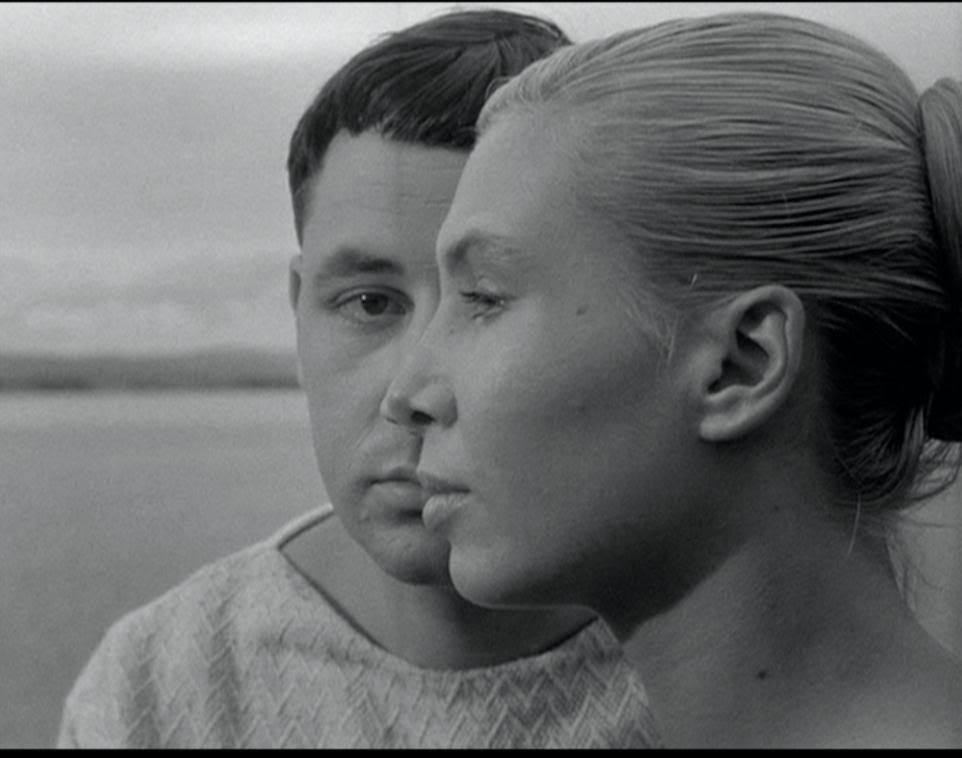
But the film that La Pointe Courte most strikingly calls to mind is one to which it shares closer national, ideological, and stylistic ties, namely Alain Resnais’ frustrating masterpiece Hiroshima mon amour, which was produced five years later (perhaps not so coincidentally, Resnais was one of La Pointe Courte's editors). Varda’s debut feels like a milder ancestor to Hiroshima, centering itself (with less anguish and more warmth) on identical issues of place, identity, and the historical baggage of cross-cultural relationships. Varda employs the same stylized language in the dialogue she gives her actors, which reads as exchanges of monologues rather than genuine engagements in conversation. The register and cadence are that of the stage, with inflections (occasionally) of the poetic and (at worst) the thuddingly philosophic. The stylistic traits that La Pointe Courte and Hiroshima share—the marks of an era striving for serious, adult themes in its movies—are exactly those that severely date them, and make them difficult for some contemporary viewers to appreciate. At this early stage in her career, Varda’s sense of cinema was relatively stilted, based primarily on what she learned from her photographic and academic backgrounds—an understandable weakness for a first-time director with no training in film, but one that she would outgrow by the end of the decade.The age-old problems of cinema and literariness raised by La Pointe Courte’s dialogue extend to the film’s audacious structure, which Varda has admitted to borrowing from William Faulkner’s 1939 novel The Wild Palms. By placing a love story (essentially a couple’s ongoing duet) at the center of a comparatively diffuse, polyphonic portrait of a community, Varda’s set-up shows the potential to teach us how conflicting genres can speak to each other. One major advantage of this form is the way the social consciousness of the film’s neorealist sections acts as a check on the self-absorption of the spouses’ philosophizing. But too much of the film’s tension (between both characters and genres) remains on the page, stifled underneath an overly neat theory. It is Varda’s fully formed visual sensibility that allows us to forget the insistent literariness of her script. Long scenes of the couple’s back-and-forth are punctuated by lovely observations, such as that of a crab scuttling through water, or a slippery sea creature coiled in a bucket. But the film’s most breathtaking moments are not limited to images of the natural world. My favorite scene occurs when Monfort and Noiret crawl into the belly of an abandoned ship, and are cradled in its shadows.
If La Pointe Courte is indeed the first major film of the French New Wave (as many scholars now acknowledge), predating even 1958’s Le Beau Serge, then why is it excluded from popular histories of that movement? Some of the more obvious answers include the institutional sexism that made the nouvelle vague a boys’ club, as well as Varda’s career-long alignment with the period’s less commercially appealing Left Bankers (Alain Resnais, Chris Marker), who did not share the common link of Cahiers du Cinéma that united auteurs as disparate as Rohmer, Rivette, and Chabrol. In addition, unlike the more popular Cléo from 5 to 7—though not dissimilar from, say, Rohmer’s Moral Tales—La Pointe Courte is completely lacking in the youthful bursts of energy found in a film like Breathless. It is, after all, partly about a couple’s quiet initiation into adulthood, that threshold past which an authentically youthful perspective of the world is all but irretrievable.Alternately cynical and optimistic, Varda’s film encourages an outlook of acceptance: in the marriage melodrama, it muses on the inevitability of diminished passion and erotic feeling, and in the neorealist sections, it reconciles with the naturalness of death. That Varda adopts this view without draping her film in melancholy is a rare achievement, unfortunately marred by a conclusion that feels pat and unearned, like a naïve person’s affectation of maturity. In spite of its flaws, though, La Pointe Courte establishes many of the trademarks that have defined Varda’s career up to her last major feature, the 2000 documentary The Gleaners and I, including her resourceful use of settings, her acute eye, and a remarkably complex and distinctive modulation of tone. Already apparent are qualities that could be seen as having filtered down to (if not having directly influenced) a loose-knit feminist aesthetic in contemporary French cinema: the lyricism and stillness that Claire Denis has taken to new heights and lengths; the alertness to both nature and the nuances of female agency found in the work of Pascale Ferran. Calling Varda “the Grandmother of the French New Wave” may in fact do a disservice to a legacy that long ago transcended the zeitgeist it fostered.
Image/Sound/Extras: Spanning three decades in the career of a filmmaker who has been active for more than fifty years, The Criterion Collection’s 4 by Agnès Varda gathers together uniformly superb transfers of four fiction features and three shorts. Also included is a trunkload of extras, many of which seem to have been specifically designed for this set. Taken together, the films show the remarkable growth of an artist, as well as the shifts of aesthetic and thematic preoccupations across the second half of cinema’s first century. What the disc for La Pointe Courte lacks in the variety of material that supplements the three other titles, it makes up for with two substantial interviews of the director—one shot recently in her office in France, the other cobbled together from excerpts of a 1964 episode of the TV show Cinéastes de notre temps. The contrast between the younger and older Vardas is a pleasure in itself, but both featurettes also have a great deal to say about the circumstances under which her career in film began. Produced at a time when aspiring French directors had to climb the studio ladder to make their first feature, La Pointe Courte was the act of daring that jump-started the New Wave and its promotion of personal cinema. Varda recalls the film’s journey from Cannes, where it received critical acclaim but no interest from distributors, to Paris two years later, where it quickly became a favorite among intellectuals and taste-makers.
Andrew Chan is a poet and film critic currently studying at UNC-Chapel Hill. He is the creator of the blog Movie Love.
Monday, January 1, 2007
The Criterion Collection #74: Vagabond
By Andrew ChanDespite the persistent belief that great art is driven and justified by an intellectual (rather than emotional or aesthetic) impulse, it is in fact difficult to make a film whose basis is conceptual without the results coming off as simplistic or overly designed. Such films present themselves with the challenge of filtering the world through an idea, a phrase, or even a single word, and ultimately fail if the starting-point diminishes our worldview rather than expanding or complicating it. There are, of course, some outstanding examples of films that wear their thematic concerns on their sleeves while also succeeding as art, one being Kieslowski’s Decalogue, which addressed the limits of its approach by embracing and revising the old form of the parable. Another example would be the major films of Agnès Varda, which employ a mode of storytelling that launches from ideas, or from the rickety language we use to encapsulate ideas, and risks the theoretical and the literary in order to achieve (at its best) a beautifully nuanced metacinema. With the Faulkner-inspired structure of La Pointe Courte, the real-time experiment of Cléo from 5 to 7, and the explorations of one-word concepts (“happiness” and “gleaning”) in Le Bonheur and The Gleaners and I, Varda encourages her audience to question the ways in which movies construct, interrupt, and sometimes collapse the narratives and meanings they put forth.
In 1985’s Vagabond, which won the Golden Lion at the Venice Film Festival and is still probably her masterpiece, Varda’s affinity for the conceptual manifests itself both stylistically and thematically. But her career-long suspicion of any conclusive vérité that might be extracted from cinema makes for a film that revolves around ambiguities and questions rather than big statements; in fact, Varda goes so far as to remind us of this early on with a shot of a red question mark painted on the wall of a building. Like La Pointe Courte and Cléo from 5 to 7, Vagabond operates on a structural gimmick; evoking Citizen Kane, Rashomon, and (according to Varda) the experimental novels of Nathalie Sarraute, the film sets out to reconstruct the life of a dead woman named Mona (Sandrine Bonnaire) through a series of rambling flashbacks punctuated by uniformly terse, direct-to-camera testimonies from people who were acquainted with her.Found frozen to death in a ditch in the opening scene, Mona is revived as a subject for investigation. We learn that she was a drifter but are only given clues to her former life as a typist and vocational school drop-out; we discover nothing of where she used to live or the family she has run away from. As the film moves from scenario to scenario, we meet men who found her sexually unyielding, overly idealistic, or unappreciative of their charity; and women who were fascinated or repulsed by (or even jealous of) her complete disregard for social norms. Highlights among these characters include a hippie who gives Mona shelter; an agronomist who takes her on as a kind of sociological project; a Tunisian migrant worker who promises to take care of her; and a maid who views her as a romantic figure capable of drawing out passion in men. In this tangle of flimsy interpretations, Mona hardens into a new cinematic archetype: a young female rebel who is genuinely without a cause. But neither Varda nor her audience is capable of summoning interpretations that are not ideological or poetic, even though Mona’s journey is strictly non-ideological and non-poetic. We are led back to the devastating old cliché that nothing and no one can be fully known, since knowledge is dependent on competing subjectivities.
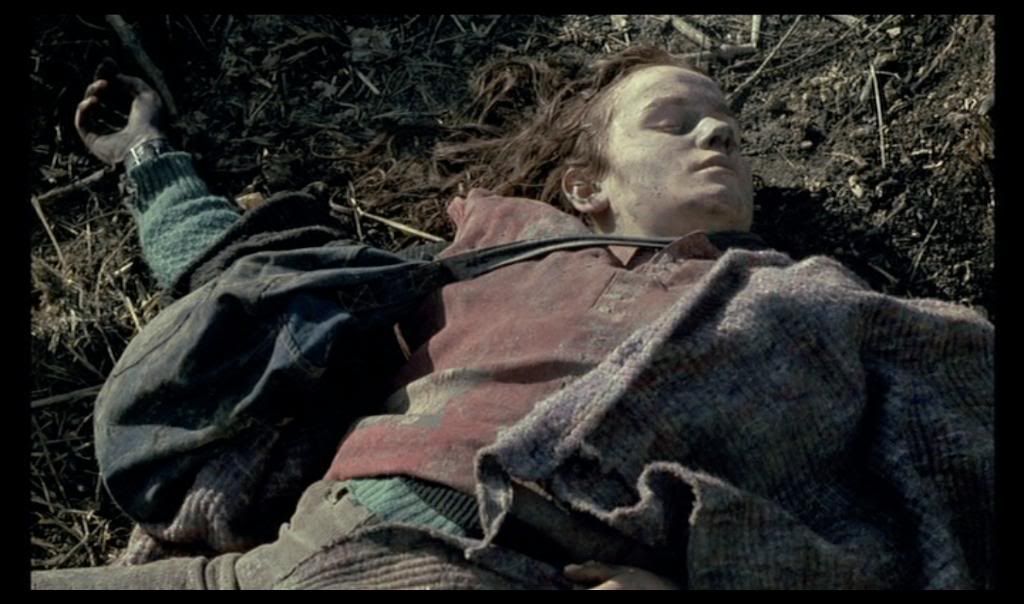
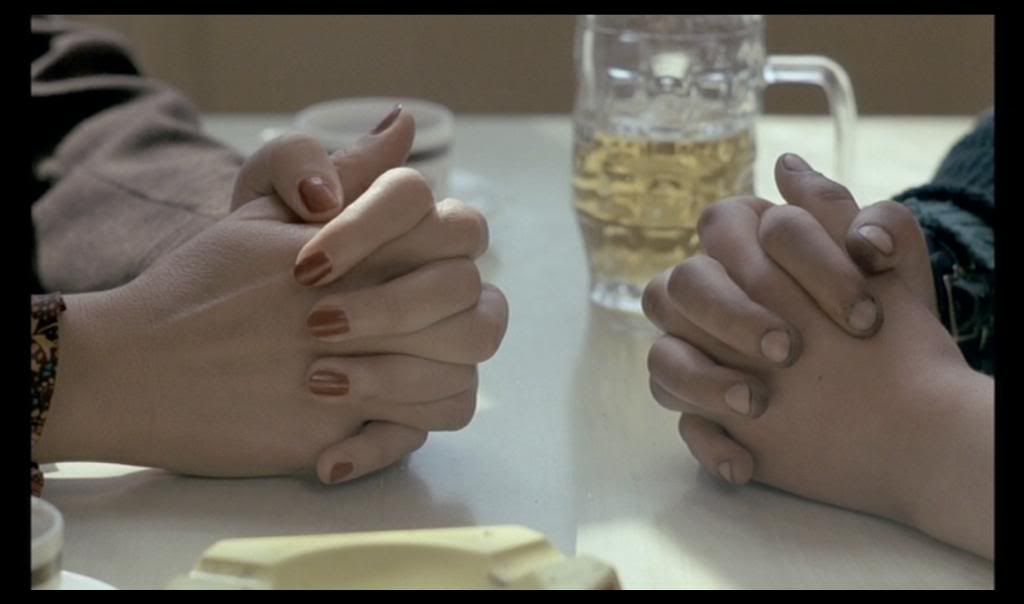
While the Welles of the ’40s and Kurosawa of the ’50s were a little too pleased with their innovations, directing as if they were the first filmmakers to discover truth’s slipperiness, Varda’s own take on this classic multi-POV structure shows ease and mastery worth those intervening decades. Vagabond begins creakily with Varda as narrator, already mythologizing Mona as some magical creature from the sea; one would be forgiven for anticipating a control-freak of an auteur who won’t stop flaunting her own devices. But the voice-over is dispensed with, and Varda’s grip on the material becomes looser, as if to match the grunginess of her anti-heroine. As she contrasts the overlapping truths emerging from her eccentric cast of characters (most of whom are played by non-professional actors), our attention is directed away from intellectualizing Mona’s splintered identity to experiencing it. Varda’s concept-driven style remains fluid; it rarely overstates itself, and exhibits the director’s willingness to step back and let Bonnaire’s remarkable performance embody not just ideas but also a credible, fascinating, individual self. Despite the faultiness of truth, the film allows for the fact that someone actual is being resurrected here; in a sense, cinema makes real; and the truths about Mona that have been omitted or obscured are no greater than truths omitted and obscured in the constraints of any fiction or non-fiction narrative. In the wild eyes of a precocious actress (Bonnaire was only seventeen at the time of production), Mona’s doom, charisma, and affected dispassion take on a documentary-like authenticity, comparable to legendary direct-from-the-streets performances such as Fernando Ramos de Silva in Pixote.The major theme of Vagabond turns out to be another concept: freedom. (The film would make an interesting double feature with Kieslowski’s upper-class Blue.) The cost of being completely free of society’s expectations, the pain of relationships, and the boredom of work is being, in the end, completely alone. It is clear not only that Mona has liberated herself from the drudgery of what she saw as limited, quotidian options, but also that she is free from making the sacrifices domestic women are forced to make when they marry men. In the ’80s, the phenomenon of “homeless and lawless” women (in the words of the film’s French title, Sans toit ni loi) was still quite new in France. Varda makes a distinction between the reactions Mona receives from the different genders; men, on their motorcycles and in their trucks, often look past Mona’s filth and see a potential sex object, while women see a possibly feminist pioneer who fends for herself in a male world. The film is, on the one hand, repulsed by Mona’s unladylike filth (the camera catches her cleaning out her nose on more than one occasion) and her rejection of all things passionate and interpersonal, but on the other hand, it can’t help but celebrate her almost pious reduction to an elemental existence. This sympathy arises in spite of the fact that Mona never becomes a sympathetic character.
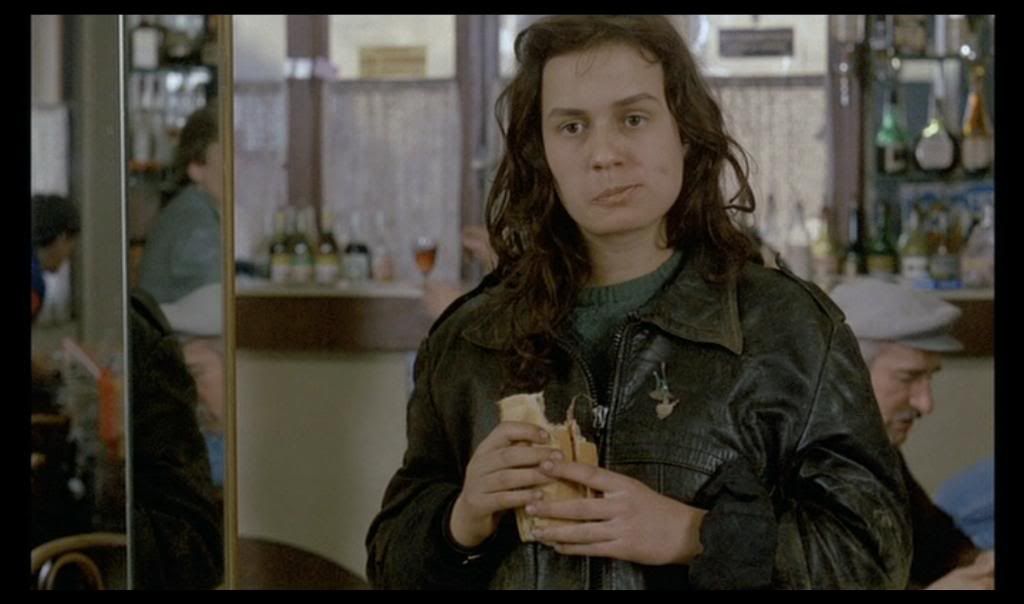
Even more urgent than the film’s ideas on freedom is this question of sympathy, which is a sly but forceful implication of the audience. The film implicitly asks: What qualities are required for a person to be deserving of other people’s compassion? The same question was hurled last year at the Thoreau-wannabe in Into the Wild, another willfully irresponsible outcast who, one might argue, also brought tragedy on himself. But Vagabond is much less romantic and transcendent than that film, or almost any other film about drifters that has followed it. With dirt-colored cinematography, prickly textures, and an eerie violin score that mimics a lacerating wind, it rarely gives us refuge from the harshness of its exteriors; it seems that few films have ever been set at such a merciless physical and emotional temperature. When we first see Mona’s dead body in this dead landscape, our impulse is to search for the victim, the martyr, or the symbol in her.But we can’t pity her the way we do Lars von Trier’s put-upon stoics; we learn soon enough that she’s an unapologetic nihilist who has no interest in saving herself, let alone the world. What place does our compassion and charity take in this story? How do we explain her motivations to ourselves? Is she responsible for the choices she makes in a world that seems to be without real choices? Can we dismiss her as the product of social oppression or psychological illness, or do we find pieces of our most fundamental fears and longings in her? These questions go to the heart of how poverty, pain, and filth continue to be moralized in our society. Vagabond, one of Varda’s most shrewdly political films, recognizes the privileged position cinema places us in by offering entire lives up to our scrutiny. It makes itself equal to such a responsibility. The film’s great achievement is a character who repeatedly confounds our most ingrained senses of judgment.
Image/Sound/Extras: The fourth disc in The Criterion Collection’s generous and eye-opening set 4 by Agnès Varda, this is an update of an extra-less version the company released in 2000. Image and sound are as immaculate as one would expect from a new high-definition digital transfer supervised by the director herself. The illuminating essay included with the package, written by critic Chris Darke, is a vast improvement on the one by Sandy Flitterman-Lewis found in the earlier edition. But the real highlights here are a new bounty of supplements: these include the forty-minute making-of documentary Remembrances, in which we get to see an older, shockingly glamorous Sandrine Bonnaire; a brief interview with composer Joanna Bruzdowicz followed by a back-to-back presentation of all the film’s dolly shots; a 1986 radio interview that explains why Varda dedicated the film to the French novelist Nathalie Sarraute and which suggests a kinship between these two underappreciated, groundbreaking female artists; and, perhaps best of all, a short tribute, in much-degraded 16mm, to the charming actress Marthe Jarnais.
Andrew Chan is a poet and film critic currently studying at UNC-Chapel Hill. He is the creator of the blog Movie Love.
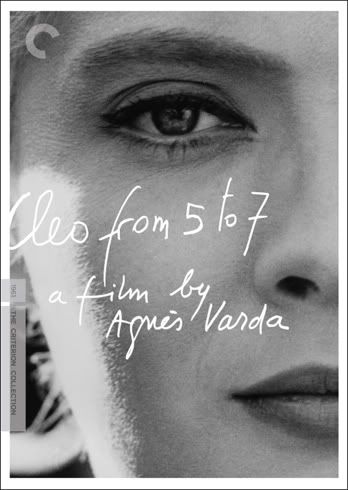
The Criterion Collection #73: Cléo from 5 to 7
By Andrew ChanAgnès Varda’s Cléo from 5 to 7, the film that put the “Grandmother of the French New Wave” on the international map, follows a pop singer (Corinne Marchand) through the streets of Paris as she awaits medical results that will report the severity of her cancer. Captured in approximate real time, her journey begins in a fortune teller’s office; within minutes, a foreboding tarot reading has her convinced she’s done for. But the film that follows is never chained to the heroine’s sense of impending doom. From start to finish, Cléo is a remarkably tonic portrait of urban anxiety, the sloth of the privileged, and the hazards of day-to-day, hour-to-hour living. Usually identified with the more serious and radical Left Bank division of the New Wave (which also included Alain Resnais and Chris Marker), Varda adopts the free-spirited attitude of Truffaut and Godard’s earliest popular successes, resulting in a film that is both a study in stylistic possibilities and a valentine to urban life.
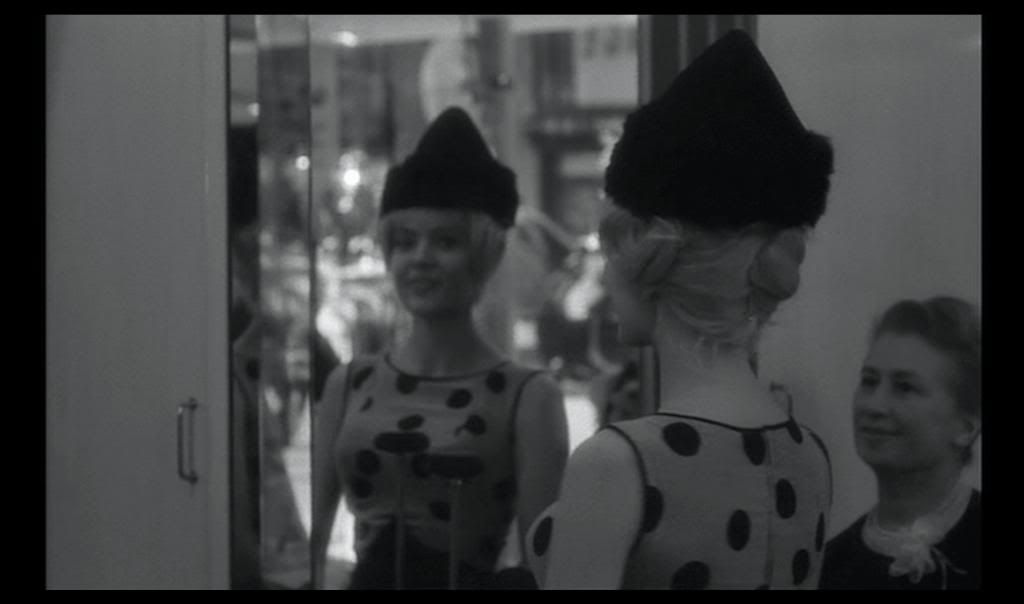
Varda has stated that Cléo marked the first time she was able to reconcile her interest in the artificial, reconstructive properties of film with the medium’s capacity for authentically documenting the real world. This tension between the natural and the fabricated echoes not only in Varda’s stylistic flourishes (her idiosyncratic editing; her thrilling mixtures of genre) but also in the personality and predicament of her title character. Has there ever been a tragic heroine as unimposing as Cléo, or a depiction of illness as deliberately on-the-surface as in this film? Varda commits her first transgression by setting Cléo during what she admits are the raciest two hours in everyday French life, that period typically set aside for an evening roll in the hay. The film departs from our expectations of how the ill should be represented onscreen, the departure being particularly jarring because Varda introduces that weighty word “cancer” right off the bat. The audience’s immediate desire is to sympathize with Cléo, to heroize her, and to be helped along by some wholesome, old-fashioned melodrama. Instead, we find Cléo concerned about her potential loss of youth and beauty, constantly staring at herself in the endless hall of mirrors formed by the shop windows of Paris. Soon enough, we find her concerns pushed to the film’s margins time and again by more frivolous attractions.By surrounding Cléo in an environment of blithe obliviousness, Varda would have us convinced that the central drama here—the gut-wrenching anticipation of destiny; the misfortune of a possibly premature death—is of no real import. This unsentimental strategy allows us to discern one of the central issues laid out in the film, which concerns the rules of public emotional display. How does a film (or a person) weigh private fears against the social (and even political) priorities of the world? In one scene, Cléo walks into a restaurant for the sole purpose of playing her latest song on the jukebox to gauge the customers’ (largely indifferent) reactions. Moments later, she is riding in a taxi, hearing celebrity news about the recovery of Édith Piaf from surgery, and world news about the Algerian conflict. In this clever juxtaposition of audio, we are confronted with the fundamentally feminist question of where an individual woman’s anxieties stand in the grand scale of a busy, tragic world, as well as the humanist question of how we look outside ourselves without our personal suffering being illegitimated.
Whenever Varda decides to bring on the old-school heartache, she does so using the most transparently artificial means. On the rare occasions that we are allowed to plunge into Cléo’s psyche, we either hear her thoughts in voiceover, or experience her fear through a series of jump-cuts. The first time Cléo breaks into tears is exactly the point at which the film’s emotional expression and its transparency as film collide. In one of the most astonishing scenes, the camera starts off observing Cléo at rehearsal, slides in to frame her in the manner of a musical number, then quickly zooms out to jerk the audience back into the film’s “standard” layer of reality.Real-time structure always positions a movie at the center of cinema’s oldest genre division: the split between documentary and fiction which Varda has mined throughout her career. Approximations of “real time” in movies are usually undertaken with the intent of establishing a heightened reality. But attempts at this challenging stunt are few because, no matter how realistic cinema may pretend to be, it always exists in a separate universe, one whose sense of time moves according to the characters’ emotions or the director’s idea of what will keep an audience interested. As a gimmick, real time holds such fascination precisely because it is so confused about what it wants to achieve: while in theory it strives for slice-of-life naturalism, in actuality it can never divorce itself from the wish to be audacious, pyrotechnic, virtuosic—the same wish that, to a certain extent, underlies all our notions about the magic of cinema.
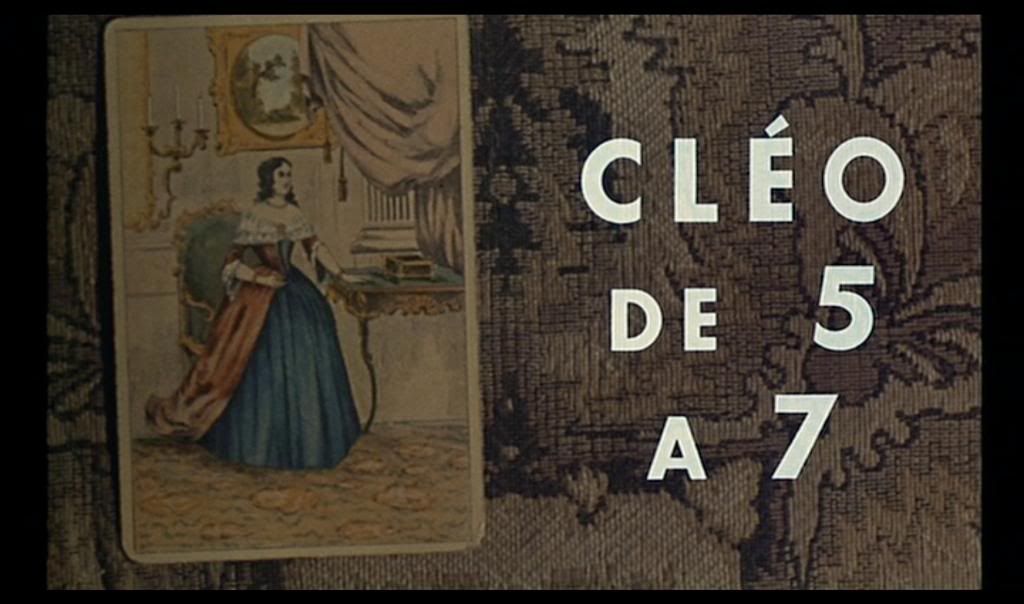
The most famous examples of real-time experimentation have a decidedly non-naturalistic effect: Hitchcock’s Rope looks staged; Sokurov’s Russian Ark is sublime and hallucinatory; Linklater’s Before Sunset practically swoons as each second passes by. As in life, the typical film takes time’s passage for granted. But in real time, that passage is isolated and can become more entrancing than even the visual, spatial or aural qualities of a film. In Cléo, Varda invokes the concepts of realism and naturalism implicit in the use of real time, but she also does everything in her power to challenge them by slicing up the flow of time with her sometimes startling edits, and saving the film’s longest takes for the end so that they feel like a breath of fresh air, or a sigh of relief.Cléo moves in sections, with each new chapter title announcing not just the starting but also the ending time of a sequence. This formalist gesture attempts to toll us back to our conception of the film as an exercise in realism. But the principal delight is in watching Varda break her own rules. She has never been a minimalist, and far from being an attempt at “pure,” aesthetically chastened cinema, this film makes its audience aware of the many tools that lie at a director’s disposal. Beginning with the transition from color to black-and-white in the film’s first chapter, we are made conscious of the wide assortment of tricks being played, and as Varda adds on fractured editing, Michel Legrand’s lovely score, claustrophobic art direction, and collage-like bits of sound design, we get the sense that each moviemaking mechanism constitutes another layer of (or an additional distance from) reality. As much as Breathless or Shoot the Piano Player, Cléo is built on a relationship to movie-loving culture. Not only does the film feature cameos from Godard and Anna Karina, but these appearances occur in their very own set-piece: a film within the film. The mounting joy we feel in the final scenes is plugged directly into our cinephilia, as the film becomes reminiscent of great movies that were made before it (particularly Murnau’s Sunrise and Minnelli’s The Clock) and after it (Before Sunset).
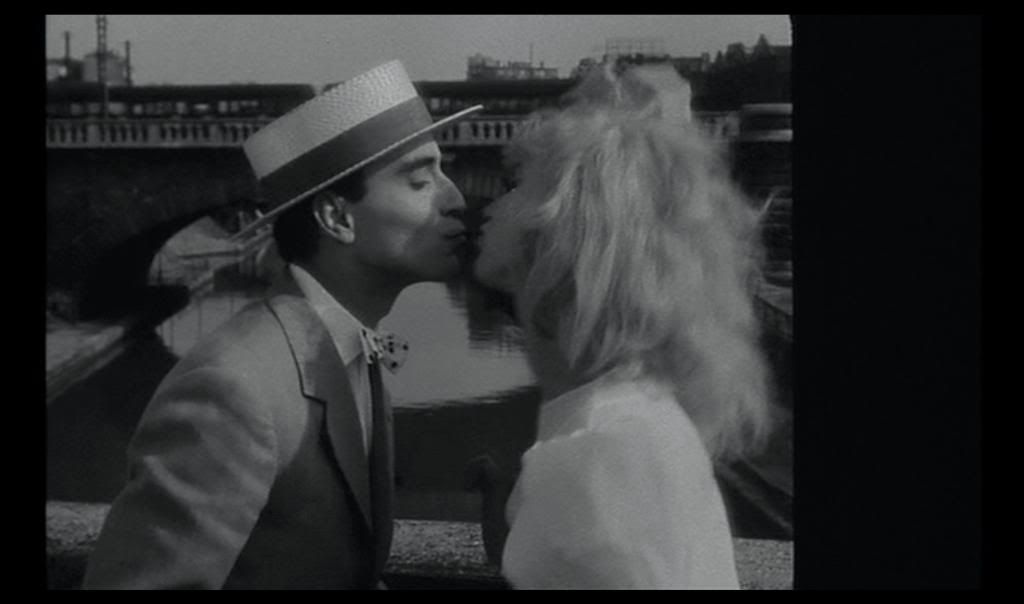
Lying underneath the film’s ostensible obsession with time is Varda’s carefree, pleasurable pacing. Where real time rendered Hitchcock stilted, it made Varda jazzier, certainly freer and more associative than in her carefully scripted debut, La Pointe Courte. Cléo shuffles along leisurely, big-hearted and receptive to all the distractions that come its way, at times falling into some of the most rapturous moments to be found in the Varda canon. Marchand’s performance hits its peak when Cléo, in her first moment of complete solitude, descends a set of stairs toward a park, singing and puckering her lips like the star of her own revue. In this late scene, we understand for the first time that—as much as Cléo’s outwardly driven personality and hunger for attention have been influenced by a culture that demands women be image-conscious—our heroine is also, at the end of the day, a natural born performer.Cléo isn’t the prototypical feminist classic chronicling a woman’s journey from submissiveness to assertiveness, or from silence to self-articulation. The film spends much of its time insisting upon its heroine’s superficiality, refusing to ennoble her even as she carries the burden of a ready-made martyr. The beauty of her ultimate revelation is that, even though it results from an encounter with romance, it occurs modestly, without an ecstatic climax. Throughout the movie we’ve seen Cléo do nothing but perform and act out, so what strikes us most about this ending is her non-performing, and the fact that Varda and Marchand feel no need to compensate for her by bestowing the external markers of a wise, liberated female. Cléo and her true feelings remain mysterious and amorphous, breaking with a long tradition of histrionic silver-screen sufferers. In a film possessed of such youthful, quintessentially New Wave faith in the powers of cinematic style and technique, the director’s vision falls on the side of what cannot be filmed, or even said. Cléo—at the brink of what could be true love—finally stands on her own, proving herself to no one, including the film’s audience.
Image/Sound/Extras: Updating an earlier Criterion edition issued in 2000, this new DVD of Cléo from 5 to 7 (available only as part of the magnificent package 4 by Agnès Varda) features a restored digital transfer, as well as the set’s largest treasure trove of supplementary material. A good portion of these extras are dedicated to emphasizing the film’s intimate sense of place. In one 35-minute featurette, Varda interviews Corinne Marchand and Antoine Bourseiller at the locations seen in the final sequences of the film. In another, we are offered a swift trip by motorcycle through present-day Paris, recreating Cléo’s 90-minute journey through the city. The disc’s most amusing curio is an excerpt from a 1993 French TV interview, in which Varda praises Madonna’s “natural” acting ability, and the pop-star herself explains why she pursued the role of Cléo in an American remake that never got off the ground.
Inexplicably buried at the bottom of the DVD cover’s list of special features, Varda’s 1958 short film L’opéra Mouffe is actually one of the best discoveries the entire box-set has to offer. Introducing itself as a diary of the everyday impressions of a pregnant woman, the film (which is silent except for its musical soundtrack) succeeds as both poem and document. Scenes of naked young lovers in bed and the elderly in Paris’ Rue Mouffetarde market are mixed with astonishing images, associations, and analogies—a huge melon being hollowed out; a baby chick wriggling in a broken light bulb—that evoke both the miraculousness and awkwardness of birth. Perhaps Varda’s numerous short films deserved a fifth disc all to themselves; L’opéra surely warrants its own essay in the collection’s accompanying booklet, not only for the way it suggests Varda’s other vocations as a photojournalist and an installation artist, but also for its rare, personal take on a specifically female experience. As in much of her earlier work, the gravity of Varda’s subject is offset by a surprising lightness and humor, made possible by a director absorbed as much in the local charms of her film’s setting as she is in her own thoughts.
Andrew Chan is a poet and film critic currently studying at UNC-Chapel Hill. He is the creator of the blog Movie Love.