By Dan Callahan
[The Furies streets on June 24th, 2008. Screencaps from DVDBeaver.]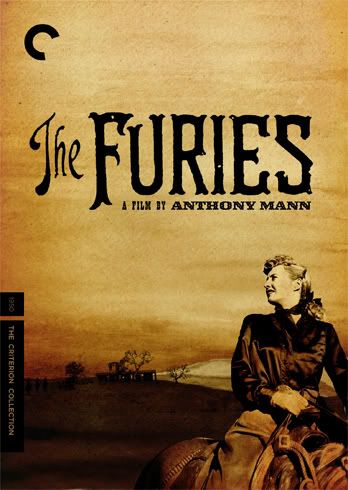
At its core, The Furies is a passionate stand off between a father and a daughter, played by a rip-snorting Walter Huston (in his last role on screen) and a primal Barbara Stanwyck, who dazzlingly alternates between extreme aggression and extreme, childlike vulnerability. As T.C. Jeffords, a wily cattle baron who fancies himself a sort of prairie Napoleon, Huston is in titanic grand old man mold (if you want to see the real genesis of Daniel Day-Lewis’ John Huston-aping Daniel Plainview, look no further). His beady eyes twinkling, T.C. continually asks Vance to scratch his “sixth lumbar vertebrae,” and when you see the outrageously knowing way that Stanwyck scratches her Daddy’s itches, you’ll wonder how Mann snuck this Incest Out West epic past the censors.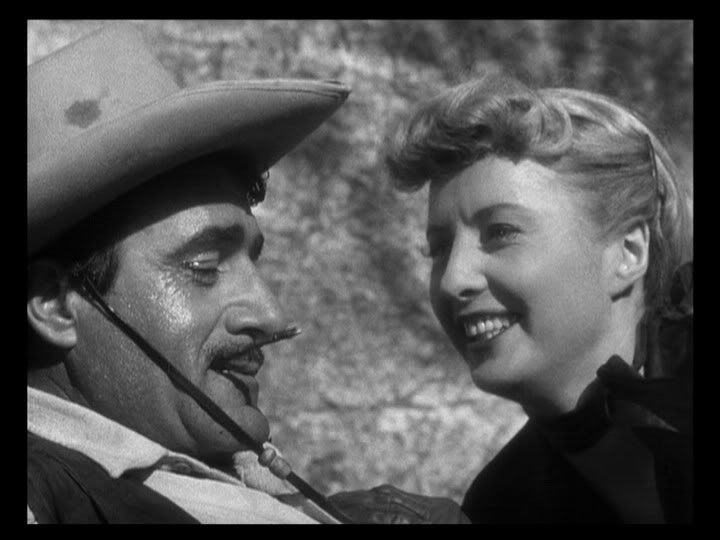
It would take a boatload of Freudian psychoanalysts to unpack all the psychosexual baggage on display in The Furies, all amplified by one of Franz Waxman’s stormiest scores; most of the film is so alarming, and Stanwyck’s Vance is so dedicatedly perverse, that it’s easy to shake off the last twenty minutes or so, which serve as a kind of valedictory for Huston the actor while smoothing out the rough edges of his crude tycoon character. Fascinating as Stanwyck and Huston are, though, in the end it’s Anderson who haunts the film. In her last scene, this former tigress rises to a level of regret that’s practically Shakespearian in its pathos and depth, matching Mann’s obsessive attempts to bring the form of classical tragedy to the western. Her suffering is echoed in the famous scene in Mann’s The Man from Laramie (1955) where James Stewart’s hand gets shot at point blank range, and the sickening scene in Man of the West where Julie London is forced to strip. Mann was always after the root of our worst impulses, and in The Furies, a very messy, provoking film, he came a little closer to those roots than he ever would again, even in the justly lauded movies of his maturity.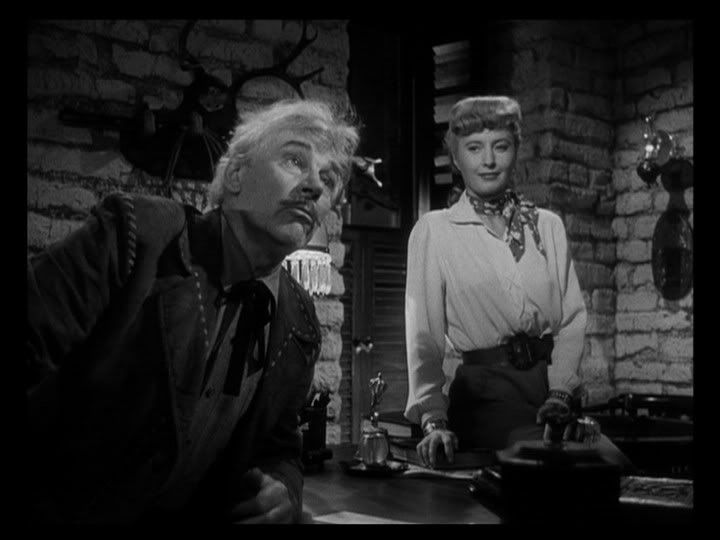
_________________________________________________
House contributor Dan Callahan's writing has appeared in Slant Magazine, Bright Lights Film Journal and Senses of Cinema, among other publications.
Tuesday, May 1, 2007
The Criterion Collection #435 The Furies

The Criterion Collection #412: Sawdust and Tinsel
By Dan Callahan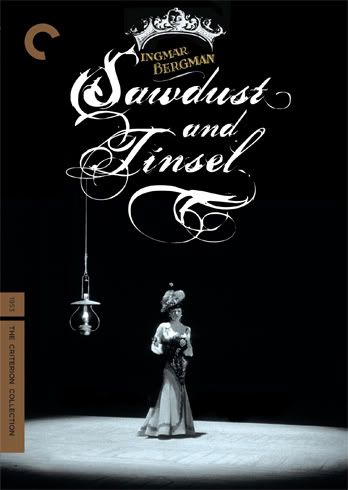
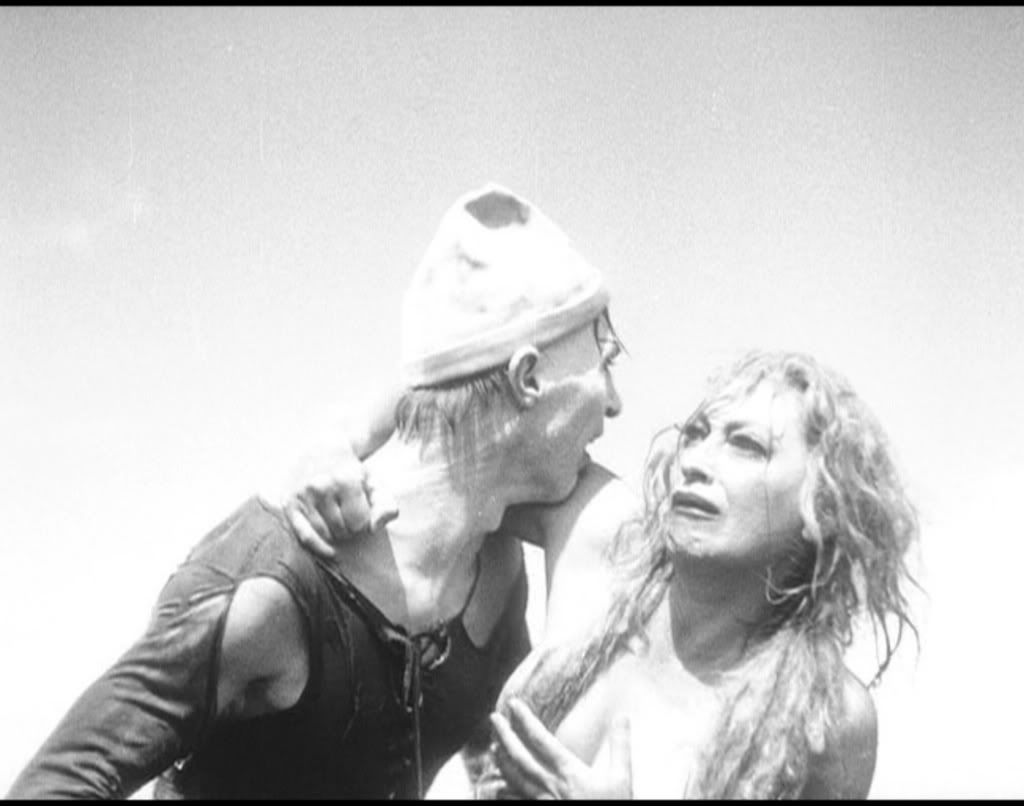
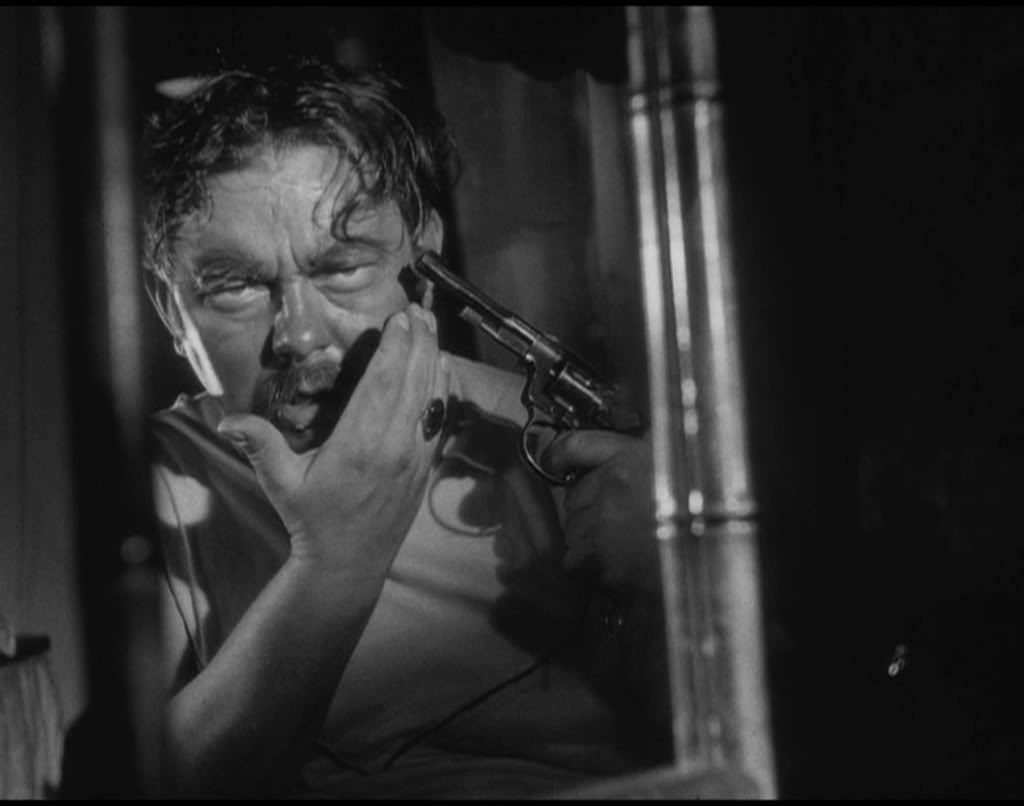

Image/Sound/Extras: Aside from two brief vertical lines, the 1.33:1 pictureboxed image is spotless, doing very well by the tricky overexposure in the nightmare flashback, and the mono sound is bracing. There’s a brief intro by Bergman where he speaks of his affection for this film, saying that he likes its “wildness,” and a solid audio commentary by Bergman biographer Peter Cowie, who reports Andersson’s latter-day tales of Bergman’s intense bouts of jealousy during the shoot. “I was bloody faithful!” Andersson insists. Maybe she was.
_________________________________________________
House contributor Dan Callahan's writing has appeared in Slant Magazine, Bright Lights Film Journal and Senses of Cinema, among other publications.
The Criterion Collection #408: Breathless
By Dan Callahan
Belmondo spends the whole Hôtel de Suède scene in white boxer shorts, while Seberg stays covered up. His hangdog sexiness is still appealing, if not as unusual as it was in 1960 (very few men had abs then, as he does). He keeps calling her a coward, and she tenderly pokes fun at the French, but the scene deepens and becomes despairing as Godard holds his camera on Seberg, who is asked to carry the entirety of the film’s existential burden, which she does with real grace under pressure. Belmondo keeps up an endless stream of talk about girls that only lets us know his lack of real experience with them, a central theme in Godard’s work that will take on gut-wrenching connotations in his later films with Anna Karina. Michel is something of a self-portrait; he blithely steals money, as Godard often did in his youth. Later, when Godard turns up as the man who identifies Michel to police, we can only feel that he is, as always, pointing the finger at himself and his own failings. “After all, I’m an asshole,” is Michel’s first line, and no one can say Godard didn’t put his cards on the table for us right from the beginning.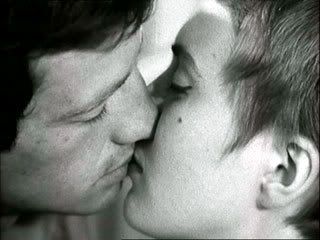
Image/Sound/Extras: The high-definition digital transfer was supervised by the cinematographer, Raoul Cotard, and it’s as beautifully sun-drenched as you’d expect, while the Mono sound is no doubt as clean as it can be. The most interesting special feature is Godard’s short film Charlotte et son Jules, where Belmondo hurls a stream of invective at his girl, who remains cheerful and silent, even when he roughly pushes her down on a bed. The nastier Belmondo gets with her, the more vulnerable he seems, and this feels more honest than the somewhat glamorous portrait of male vanity in Breathless. There’s a featurette about Jean Seberg by Mark Rappaport, nice, but no substitute for his superb From the Journals of Jean Seberg feature with Mary Beth Hurt. The most irritating special feature is an eighty-minute documentary called Chambre 12, Hôtel de Suède, where the filmmaker looks at old Breathless locations and annoys Godard by calling him twice on the phone to ask questions; during the second call, Godard has never sounded wearier as he says he needs to get back to work. What is he doing? Writing a prickly text about the war in Iraq, or staring at photos of Anna Karina, Louise Brooks, Falconetti….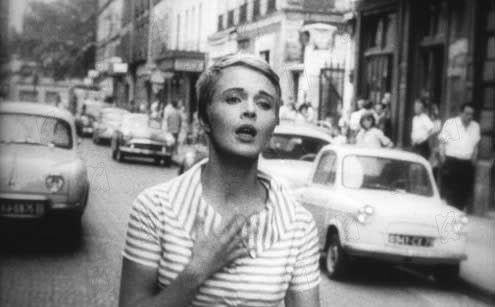
House contributor Dan Callahan's writing has appeared in Slant Magazine, Bright Lights Film Journal and Senses of Cinema, among other publications.
The Criterion Collection #403: Carlos Saura's Cría cuervos
By Dan Callahan A seamless story about memory and fantasy blurring together, Cría cuervos is unquestionably Carlos Saura’s greatest film. He made fine movies before it, and some fine ones after it, but he would never again work at quite so high a level of skill and feeling. In his first decade or so as a director, Saura had had to work against the draconian censorship of the Spanish government, but these restrictions were coming to an end while Cría cuervos was shot: General Franco was on his deathbed. Naturally, the film was seen as a metaphor for the last gasps of Franco’s totalitarian regime, and it's suggestive on that political level, but it works equally well as a universal portrait of childhood as a mysterious country where we are led from one darkened room to another and can’t really understand ninety percent of what we see and hear.
 As the protagonist, a small girl who has lost both of her parents, the uncanny Ana Torrent is so intimidatingly serious that she puts the instinctively tricksy ploys of almost all other child performers to shame. Saura dotes on Torrent’s ability to focus any chaos surrounding her back onto the void of her enigmatic, watchful face; he knows that he’s found a nine-year old Garbo, and so we see the film entirely through her lustrous brown eyes. Saura casts his leading lady and lover of the time, Geraldine Chaplin, as both the spectral figure of Torrent’s dead mother and as Torrent herself as a grown-up, still haunted woman. Chaplin differentiates the two women visually (the mother is a flirty, miserable mess, the daughter a distant fortress) and Saura dubs in a Spanish voice for Chaplin when she plays the older Torrent; this ventriloquism stands in for the often-disorienting passage of time.
 Cría cuervos is very much a film about trapped women, with the matching gazes of Torrent and Chaplin united together in silent reproach against the philandering, fascist Spanish male. Each woman on screen is complexly delineated, especially the proudly sensual housekeeper Rosa (Florinda Chico) and the rigid but not unkind Aunt Paulina (Mónica Randall), who tries to raise the orphaned Torrent and her two sisters. Paulina is the film’s most interesting character: at every moment we see her, she seems a soldier-like, well-meaning person who is trying her best, and yet we understand exactly why Torrent hates and cannot accept her dutiful, insincere efforts at parenting.
 A child can suddenly, and rightly, be afraid of just about anything, and Torrent is bedeviled by the film’s most forceful character, the shuttered, crumbling house that is her world during summer vacation, an ordinary, static place that begins to vibrate with sinister possibilities. The camerawork by Teodoro Escamilla has a contradictory sense of movement that creates a lot of tension: the camera moves seem tentative but also relentless, childlike in the best possible way. Once you yield to the rhythm and logic of Torrent’s dreams and recollections, you can accept just about anything Saura wants to show you: this is a magical movie. It lasts a little under two hours, letting us into a hermetically sealed, completely believable, recognizable world. Quite frankly, I could have watched it forever, and I think that’s because Saura discovers and dramatizes such hidden, nebulous feelings without once being obvious or doctrinaire; his tact and deep insight makes you feel like you’re finally grasping something you’ve lost. All childhood is a ghost story that we try to understand for the rest of our lives. What we, and Torrent, eventually learn about death and sex seems to bear little relation to what we have overheard about these two primal subjects as children, but this yawning gap between imagination and experience is closed, miraculously, by the film itself and its vision of remembered innocence.
 Cría cuervos deals with a lot of painful emotions, but it’s an exhilarating work because its complete evocation of our beginnings signals a kind of hope for the future, for Spain, yes, but also for our damaged, adult selves. There’s such relief when Chaplin’s grown-up Torrent says, “I remember childhood as an interminably long and sad time.” Admitting this is a simple and cleansing way of putting space between the past and the present, yet the grown-up Torrent seems to want this interminable and sad childhood back to swim around in; this perverse human impulse comes as a surprise to most of us as we get older. Death is everywhere in what we see of Torrent’s childhood, yet death is just a game she can play with her sisters out in the country, forcing them to play dead, then making them come back to life. The child in Cría cuervos is both God and film director, as far away from the movie’s silent, dignified but helpless grandmother (Josefina Díaz) as you can get. Saura’s masterpiece reclaims childhood as a time of radical invincibility, interminable, sad, both loathed and longed for for the rest of our lives.
 Image/Sound/Extras: Every dark corner of that metaphorical house is visible in Criterion’s spot-free transfer (1.66:1 anamorphic), and the murmurous soundtrack (Dolby Digital mono) is clear as crystal, which gilds the film’s repeated use of the compulsively listenable pop track “Porque te vas,” sung by Jeanette. On a second disc, there are interviews with Geraldine Chaplin and Ana Torrent. Chaplin, who is so movingly fragile in the film, is surprisingly robust and candid in her interview, an obviously intelligent woman with decided opinions about Cría cuervos. She reveals that Torrent couldn’t stand her, and that it took a lot of doing to get their erotic mother/daughter scenes right. This DVD is worth viewing just to see what Torrent looks like as an adult. Her face has lengthened, of course, so that she isn’t just a pair of dark eyes anymore, and the famous eyes themselves seem more relaxed, less turbulent. Torrent continues to act, and she is a definite European-style beauty, but it’s hard not to miss the child she was and to look for that child in vain; luckily, this extra meta-textual reflection matches up with the themes of Cría cuervos perfectly. An excellent documentary on Saura (Portrait of Carlos Saura) and a good, critical piece by Paul Julian Smith ("The Past is Not Past") make up for the lack of an audio commentary.
_________________________________________________
House contributor Dan Callahan's writing has appeared in Slant Magazine, Bright Lights Film Journal and Senses of Cinema, among other publications.
Friday, December 1, 2006
Eclipse Series 10: Silent Ozu—Three Family Comedies
By Dan Callahan
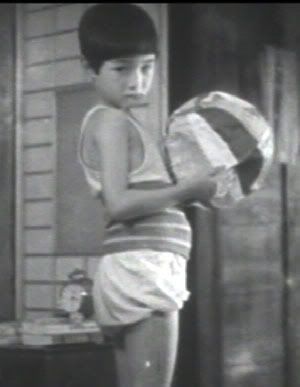
There’s an earthy, even scatological humor in Tokyo Chorus that Ozu would gradually pare away from his films, by and large, but his sense of resignation was present from the beginning. As Okada sits in a park, at loose ends and out of a job, a friend tells him that a bear has escaped from a nearby zoo. Okada smiles at his excited pal and says, “A bear getting out isn’t going to change our lives.” This “what will be will be” vibe is fine for some situations, but Ozu always takes it too far. After all, the bear might be right behind Okada and ready to eat him; the least he could do would be to get up and leave the area, but no, it doesn’t matter, he says, for nothing matters to him at this moment. At its worst, Ozu’s seemingly serene acceptance of life is actually close to do-nothing, harmful nihilism. Still, it’s hard to argue with the long scene where the desolate family tries to forget their problems with an extended game of patty cake; we can actually see Ozu’s anxious cheerfulness visibly burning away his characters’ worries. In the end, though, Ozu asks us to weep for his hero, forced to take a demeaning job with his old schoolmaster. Naruse also knew that his people had to make sacrifices to go on, but I’ll take the grown-up Takamine’s wry, almost humorous confrontation with her hated job at the end of When a Woman Ascends the Stairs (1960) over Ozu’s more adolescent and not at all funny look at defeat in Tokyo Chorus.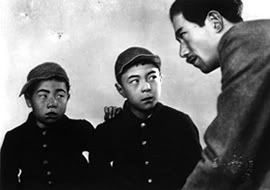
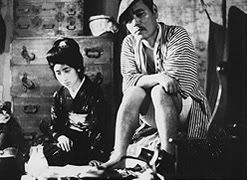
Image/Sound/Extras: Tokyo Chorus is the most visually innovative of the films, so it’s unfortunate that the image is so badly damaged; the entire movie is fighting against a veil of print decay. Donald Sosin’s piano score for Chorus is upbeat and sprightly even when things look bleakest for the characters, which works well at first, but begins to seem strange as the film goes on. I Was Born, But… and Passing Fancy look fine, and Sosin’s scores for both are excellent. No extras, since this is an Eclipse no-frills release.
_________________________________________________
House contributor Dan Callahan's writing has appeared in Slant Magazine, Bright Lights Film Journal and Senses of Cinema, among other publications.
Eclipse Series 8: Lubitsch Musicals
By Dan Callahan
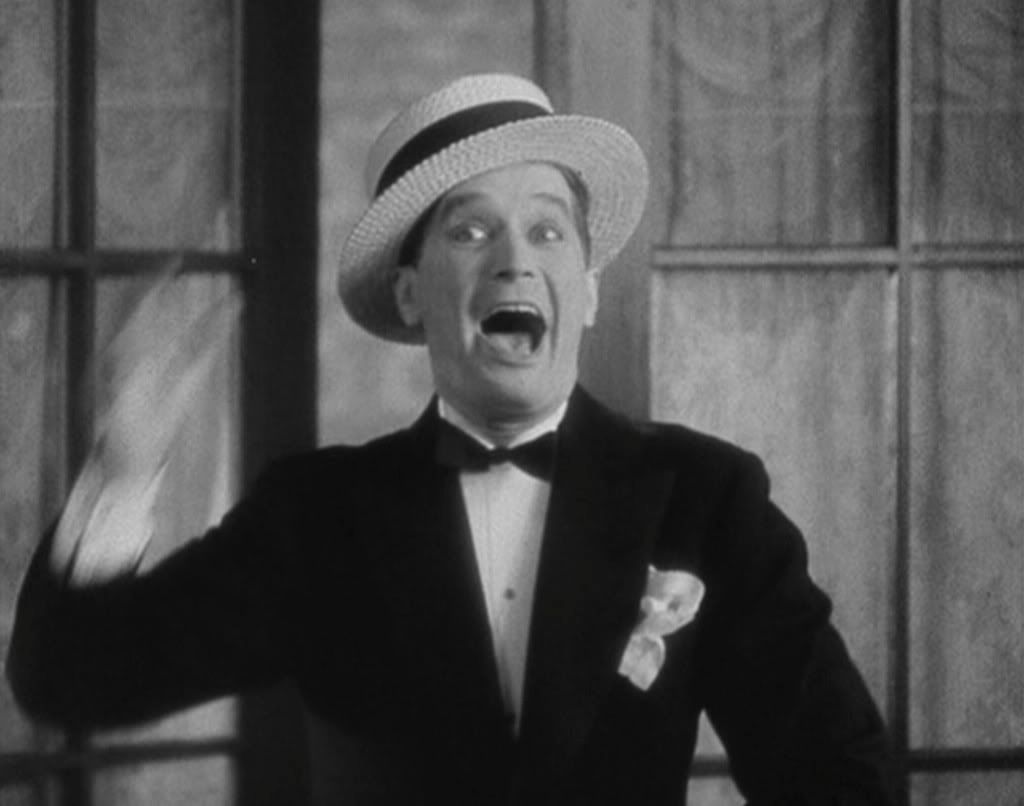
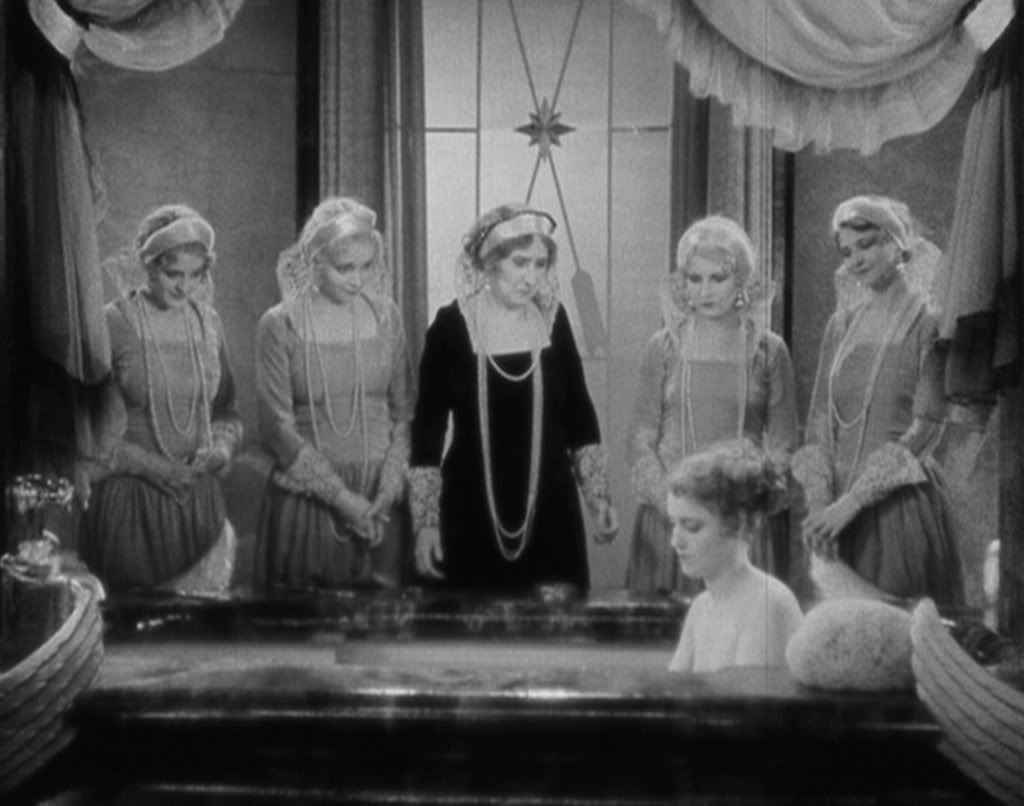
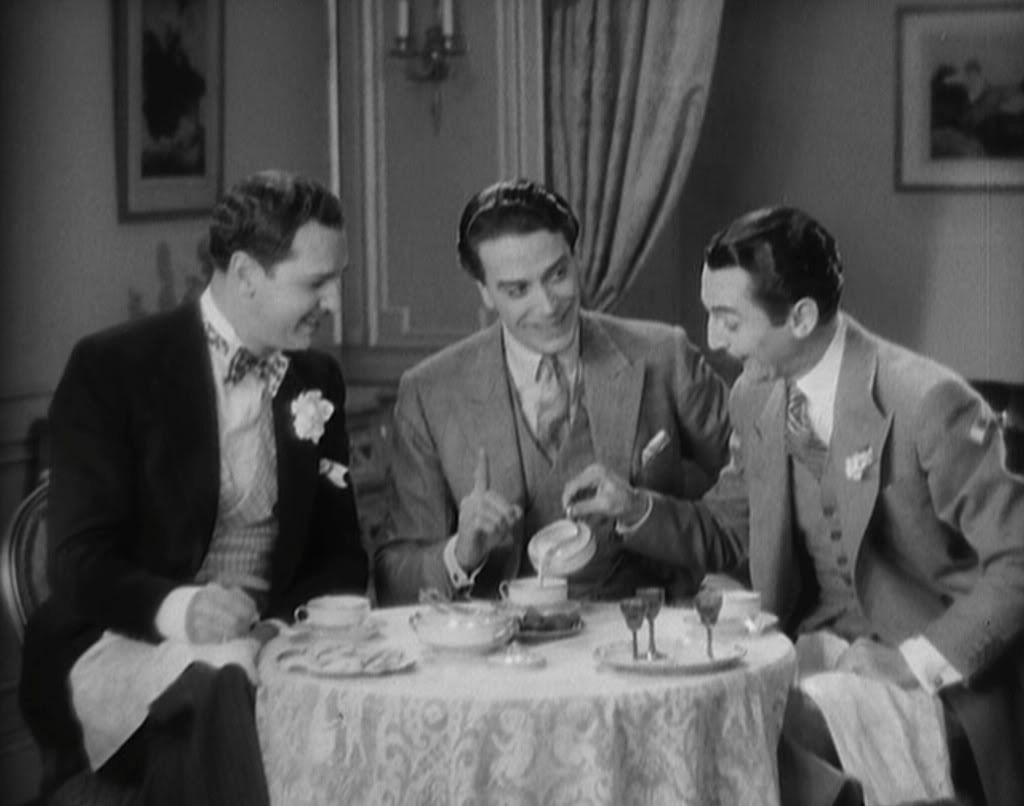
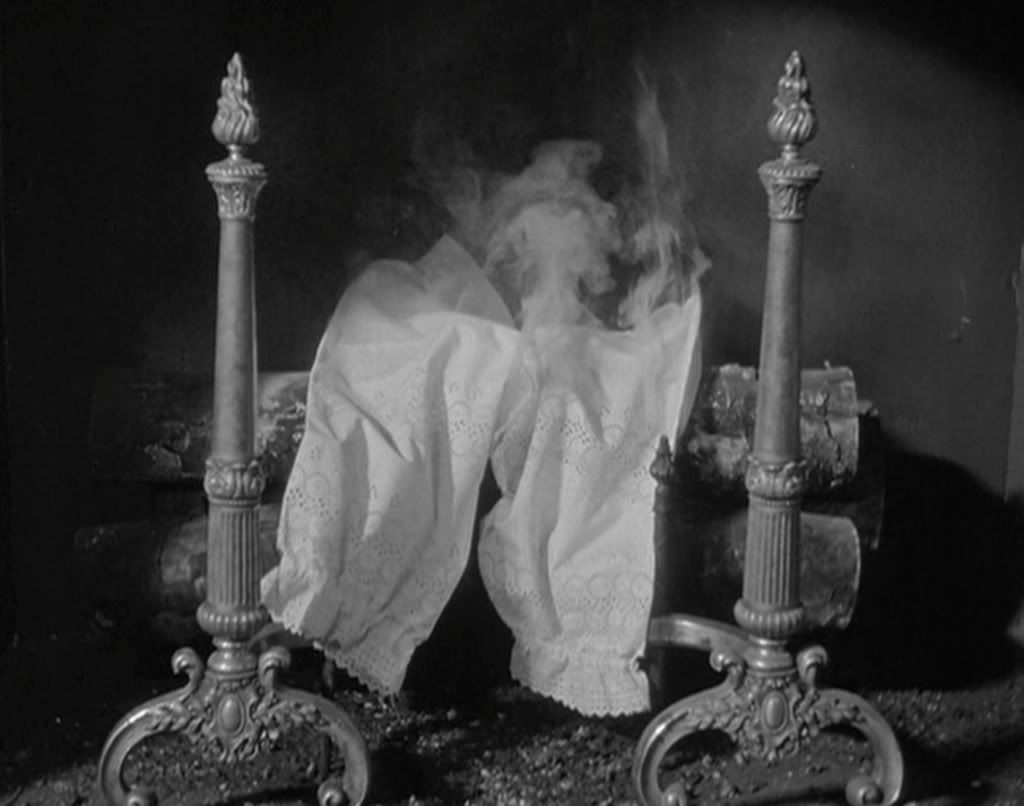
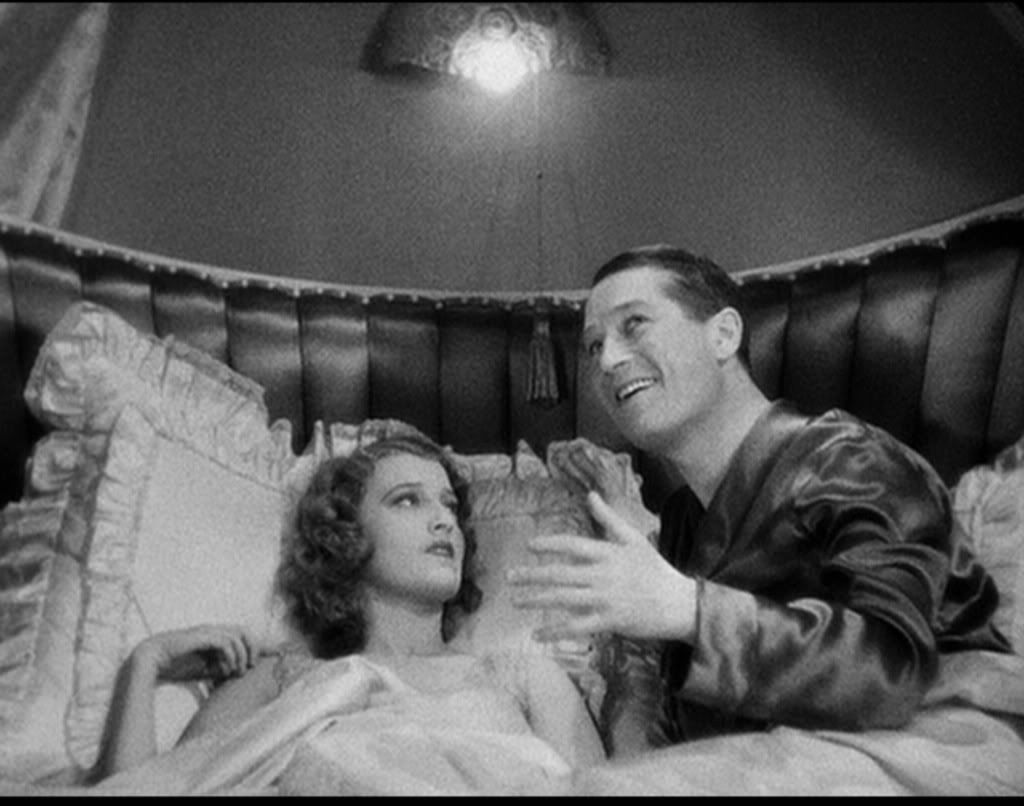
Image/Sound/Extras (editor's note: click here for more in-depth technical information on this set from DVDBeaver): The Smiling Lieutenant (aspect ratio 1.21:1, monaural) looks the best of the four, almost pristine, but poor Monte Carlo (aspect ratio 1.20:1, monaural) is in bad shape. It even goes soft and out of focus twice before MacDonald sings “Beyond the Blue Horizon,” and the nighttime scenes are barely visible. The Love Parade (aspect ratio 1.21:1, monaural) is spotty, but quite acceptable for a film of its vintage, and One Hour with You (aspect ratio 1.36:1, monaural) is grainy when it needs to shimmer. Nevertheless, this is a valuable set for a quartet of films that have always been difficult to see. Per the Eclipse series mission statement, there are no extra features.
_________________________________________________
House contributor Dan Callahan's writing has appeared in Slant Magazine, Bright Lights Film Journal and Senses of Cinema, among other publications.