By Dan Callahan

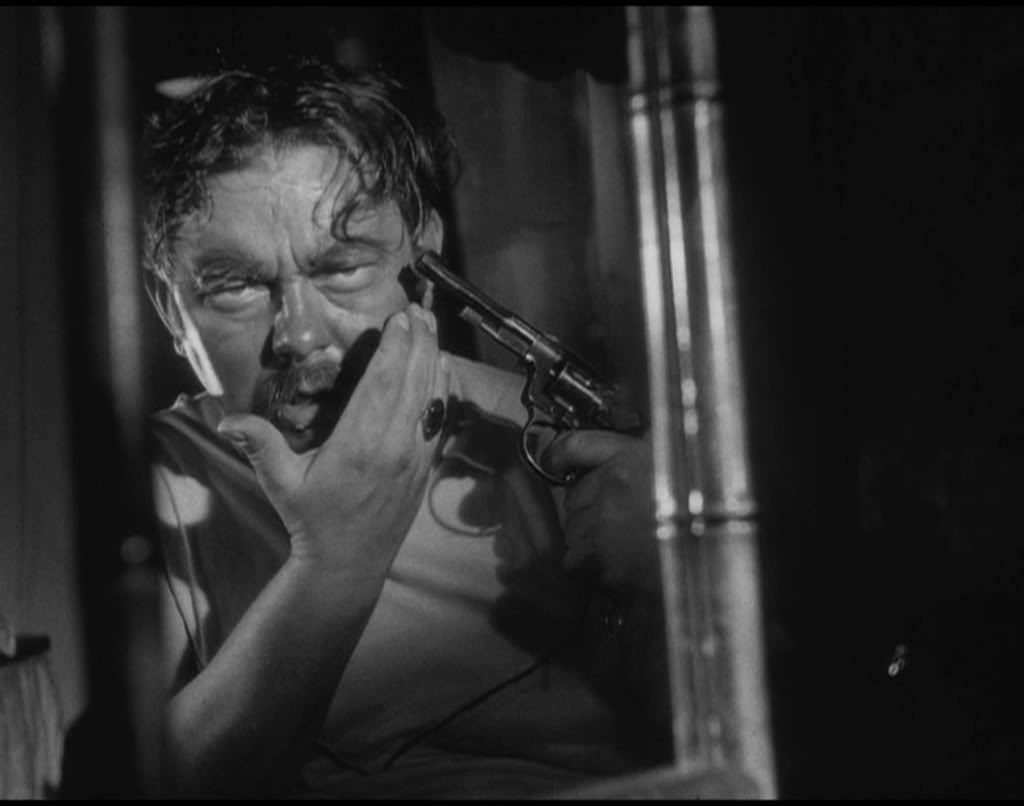

Image/Sound/Extras: Aside from two brief vertical lines, the 1.33:1 pictureboxed image is spotless, doing very well by the tricky overexposure in the nightmare flashback, and the mono sound is bracing. There’s a brief intro by Bergman where he speaks of his affection for this film, saying that he likes its “wildness,” and a solid audio commentary by Bergman biographer Peter Cowie, who reports Andersson’s latter-day tales of Bergman’s intense bouts of jealousy during the shoot. “I was bloody faithful!” Andersson insists. Maybe she was.
_________________________________________________
House contributor Dan Callahan's writing has appeared in Slant Magazine, Bright Lights Film Journal and Senses of Cinema, among other publications.
Tuesday, May 1, 2007
The Criterion Collection #412: Sawdust and Tinsel

The Criterion Collection #411: Berlin Alexanderplatz
By Robert Humanick
If one is to take the film as a whole -- a challenging act for almost any viewer, given that most of us are accustomed to digesting our art in three or four hour long chunks at a time -- Berlin Alexanderplatz is a sprawling, multi-layered, multi-character study, full of organs and constructs that would seemingly stretch out for miles if uncoiled from their tightly packed arrangements. It is a work representative of what is nowadays being made possible in the union between film and television (of the ever-growing terrain of cinema), fusing the relatively compact, carefully manicured narrative of the feature-length film with the more episodic approach of the television format. Together, the two multiply (rather than simply add upon) their myriad possibilities.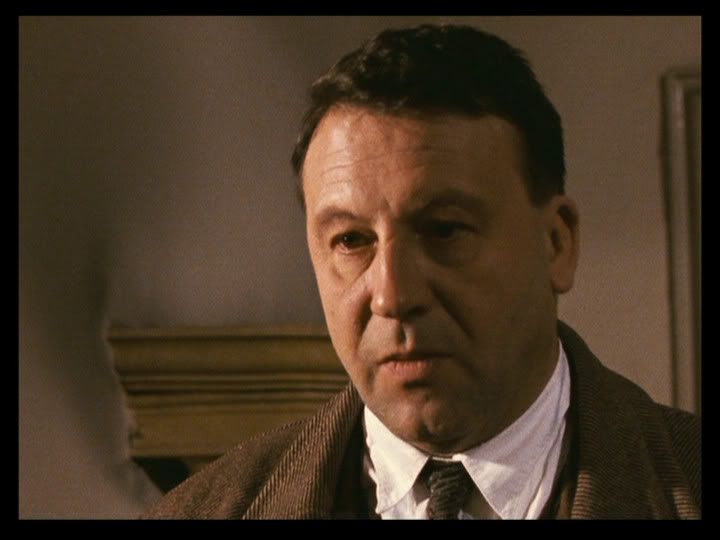
Not having read Alfred Döblin's 1929 novel of the same name (a much acclaimed literary work, well-remembered, according to my research, for its use of narrative montage over traditional, straightforward storytelling devices), I cannot attest to the faithfulness of Fassbinder's vision. Despite premiering on German television, the film is a work absolutely rooted in the cinema, every setpiece fully utilized not only for the spacial relationships between its characters, but also for the ever-changing perspective experienced by the audience. The style is deliberate, even perfectionist, without ever coming across as forced. Fassbinder waxes his brutal morality play with ravishing use of stage-like long shots and intimate close-ups -- moreso than most works of the cinema, the camera is its own life force here. Doorways, windows, and arches provide the often fragmented, constricted framing through which we routinely view these characters, and so too do these architectural structures bear down on them like the invisible forces of social order that Franz Biberkopf constantly finds himself fighting against. Berlin Alexanderplatz makes the political personal, bearing witness to its characters' slow absorption into the fabric of the Weimar era, each and every one of them half-cognizant players in some larger, unseen plan.
For me, it is in the details of these stories that Berlin Alexanderplatz shines brightest, with many of its evocations and subtleties among the deepest I've yet encountered in the medium. Among the ever-shifting storyline ultimately emerges a relationship between Franz and the innocent Mieze (Barbara Sukowa), the rhapsody of which is upset not only by Franz's own internal demons and his inability to properly recognize or rectify them, but also a strangely homoerotic friendship with the devious Reinhold Hoffmann (Gottfried John), a character of arguably greater complexity, and whose contradictions of personality at times make him even more fascinating than the more prominent Biberkopf. Although far from the only persons of importance in the film, these three characters make up the self-destructive core of Berlin Alexanderplatz, the id, ego and superego whose impossible yet highly necessary coexistence comes inevitably crashing down (in the finest scene of the entire film, set in a fog-shrouded forest, Mieze and Reinhold engage in a conflict seemingly preordained by cosmic forces). It then remains only for the shell-shocked survivors to make some sense out of this event in its ashen aftermath.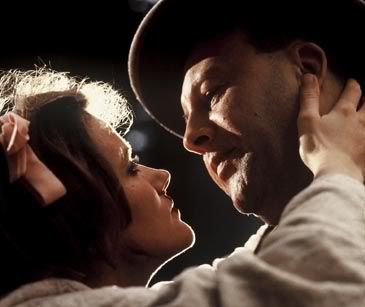
The experience of the epilogue is troubling in ways unbecoming to the material, and this suggests that, more than anything in the film prior, the flaws here greatly outweigh the benefits. But this is not to say the film doesn't arrive at an ultimately satisfactory destination. Indeed, Berlin Alexanderplatz is often able to overcome its perceived "flaws" via its own self-devouring, grandiose capabilities, while the effect of its more trying sections hinge on each individual viewer's ability to forgive the film its trespasses. If greatness is determined less by perfection than by sheer forward thrust, I can think of few better examples than Berlin Alexanderplatz. Like its main character -- prone to tangents, violence and complete self-indulgence -- it is a thing of immense beauty.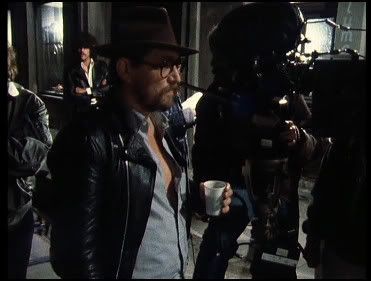
The extras, then, are not unlike whipped cream atop a mile-high meringue pie, although you may need to let the main course digest for a week or three before dovetailing into their excesses. In addition to the epilogue, Disc 6 includes the documentary "Fassbinder's Berlin Alexanderplatz: A Mega Movie and Its Story", in which cast and crew reflect on their work as if recalling some chunk of ancient, almost mythological history. Disc 7 holds the bulk of the bonus material, beginning with the informative "Notes on the Making of Berlin Alexanderplatz", a 44-minute promotional documentary made in 1979 during the shooting of the film. Most interesting here is the opportunity to see Fassbinder at work, a master in complete control and altogether without concern for anything that stands in his way. The half-hour "Berlin Alexanderplatz Remastered" covers the extensive efforts taken to restore the film, while the 23-minute interview with Johns Hopkins University professor Peter Jelavich provides a more singularly intimate deconstruction of the novel and film and their artistic and social importance. Also included is the 1931 film adaptation of the novel, directed by Phil Jutzi and penned by Döblin himself. It is an interesting work caught somewhere between the visionary technical bravura of the late silent period and the constrained medium shots of the early sound era, with Döblin having managed to whittle the essence of his work down into a mere 80 minutes. Watching it post-Fassbinder's version is nothing short of surreal.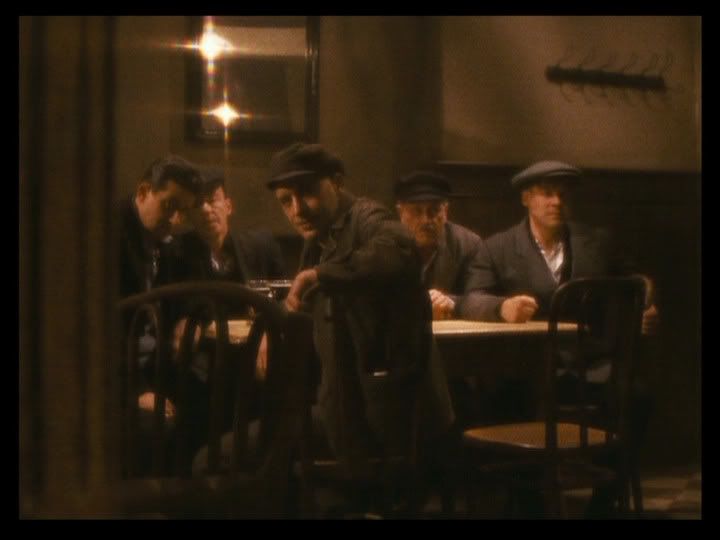
House contributor Robert Humanick's writings have appeared in Slant Magazine and on his blog The Projection Booth. He also works sporadically with fellow Slant critic Paul Schrodt at The Stranger Song.
The Criterion Collection #408: Breathless
By Dan Callahan
Belmondo spends the whole Hôtel de Suède scene in white boxer shorts, while Seberg stays covered up. His hangdog sexiness is still appealing, if not as unusual as it was in 1960 (very few men had abs then, as he does). He keeps calling her a coward, and she tenderly pokes fun at the French, but the scene deepens and becomes despairing as Godard holds his camera on Seberg, who is asked to carry the entirety of the film’s existential burden, which she does with real grace under pressure. Belmondo keeps up an endless stream of talk about girls that only lets us know his lack of real experience with them, a central theme in Godard’s work that will take on gut-wrenching connotations in his later films with Anna Karina. Michel is something of a self-portrait; he blithely steals money, as Godard often did in his youth. Later, when Godard turns up as the man who identifies Michel to police, we can only feel that he is, as always, pointing the finger at himself and his own failings. “After all, I’m an asshole,” is Michel’s first line, and no one can say Godard didn’t put his cards on the table for us right from the beginning.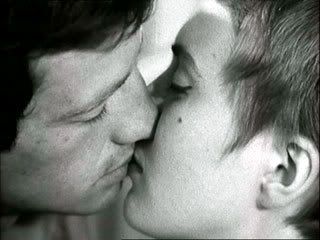
Image/Sound/Extras: The high-definition digital transfer was supervised by the cinematographer, Raoul Cotard, and it’s as beautifully sun-drenched as you’d expect, while the Mono sound is no doubt as clean as it can be. The most interesting special feature is Godard’s short film Charlotte et son Jules, where Belmondo hurls a stream of invective at his girl, who remains cheerful and silent, even when he roughly pushes her down on a bed. The nastier Belmondo gets with her, the more vulnerable he seems, and this feels more honest than the somewhat glamorous portrait of male vanity in Breathless. There’s a featurette about Jean Seberg by Mark Rappaport, nice, but no substitute for his superb From the Journals of Jean Seberg feature with Mary Beth Hurt. The most irritating special feature is an eighty-minute documentary called Chambre 12, Hôtel de Suède, where the filmmaker looks at old Breathless locations and annoys Godard by calling him twice on the phone to ask questions; during the second call, Godard has never sounded wearier as he says he needs to get back to work. What is he doing? Writing a prickly text about the war in Iraq, or staring at photos of Anna Karina, Louise Brooks, Falconetti….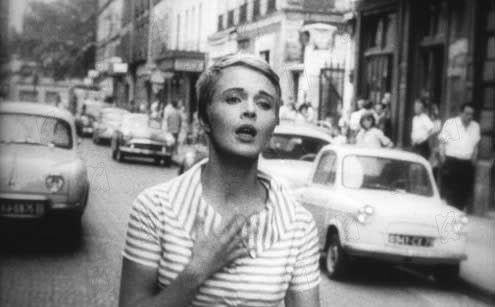
House contributor Dan Callahan's writing has appeared in Slant Magazine, Bright Lights Film Journal and Senses of Cinema, among other publications.
The Criterion Collection #407: Mala Noche
By Paul Schrodt “I wanna show him that I’m gay for him,” Walt (Tim Streeter) says early on in Mala Noche. He’s in love with a fresh-off-the-train Mexican named Johnny (Doug Cooeyate), but of course that isn’t true. In writer/director Gus Van Sant’s world, love is a sad, funny whimper, spoken for affect, as when River Phoenix huddles next to Keanu Reeves in My Own Private Idaho, trying to express feeling in a hustler’s cold language: “I really wanna kiss you, man.” Real love is never satisfied, and sex is always painful, which is Van Sant’s tragic-poetic view of gay culture condensed into an image, from the two disillusioned youths soaping each other up in Elephant to the anxious physical encounter between two friends lost in the desert in Gerry. You can’t find love until you find home, and none of Van Sant’s characters can even find themselves.
Armond White recently wrote that Mala Noche “unabashedly romanticizes Walt’s gay attraction to Johnny.” To be sure, it’s Van Sant’s most picturesque work: Shot in stark black-and-white, the movie plays like a reverie to Walt’s white, privileged lust. A simmering pot of water and the dewy surfaces of Portland become wistful metaphors for Walt’s unrequited crush. His daydreaming voiceover is echoed in the textures of city life, a la Woody Allen’s Manhattan, but while, almost 30 years later, Allen’s best film still feels like a pretty paean to his own ego, Mala Noche packs intellectual honesty. Van Sant understands how Walt’s presumptuous come-ons—offering Johnny $15 for a night’s fuck—are wound up in the destructiveness of the gay underclass, and so his story moves with the cyclical motions of a bad night (mala noche) or, more appropriately, a bad dream. Walt buys an old film camera and uses it to record his playful adventures with Johnny, a sign that Van Sant is complicit in his characters’ transgressions, editing them into precious visual poems. White and other critics have accused the director of “race and class indifference,” but Van Sant’s approach has always been personal and deeply confessional, if not outwardly political. When Walt shamelessly exploits Johnny’s friend Roberto for a cheap fuck, Roberto returns the favor by leaving his ass bruised the next morning. Walt’s grating recap reaffirms the way gay men delude themselves with petty ideas about sexuality and race: “Macho motherfucker. They’ll all have a good laugh about how they fucked the gringo.”
Criterion’s new DVD release of Mala Noche doesn’t try to shed much contemporary light on Van Sant’s first feature, instead pitching it as a “time capsule.” As an introduction to the New Queer Cinema movement, it is. But Mala Noche has also given modern gay films (from Mysterious Skin to Hellbent) a language through which to frame gay existence. Lonely and disconnected but deeply in need of human contact, these are the men Annie Proulx meant to characterize in Brokeback Mountain but which Ang Lee senselessly whitewashed. To call Van Sant’s seminal film trashy or backwards—or simply a “time capsule”—is to ignore the insights into gay life it still holds today, when it’s more or less impossible to point out a single “tasteful” gay film that’s worth watching. Image/Sound/Extras: I still have trouble believing Johnny is every bit as attractive as Walt thinks he is, but Criterion’s digital transfer of Mala Noche (supervised by Van Sant) is gorgeous for sure—still lush, inky and grainy in all the right places with no annoying artifacts or edge enhancement to speak of. Sound is equally full and impressive, especially for a low-budget first feature.
Van Sant speaks calmly and deliberately on the interview recorded for this Criterion edition, like an artist who knows his own skill and has no need to flaunt it—or, if you buy Armond White’s argument, like a chicken hawk afraid to speak off-the-cuff. What’s actually going on in the director’s head is still something of a mystery, but at least he provides some incisive commentary on how Mala Noche’s boldness helped launch New Queer Cinema and the hobo-poet’s paradise (Portland, Oregon) that is his shooting ground. Much less informative is Walt Curtis, the Peckerneck Poet the 1995 documentary on the author whose memoir laid the groundwork for the film. No wonder Van Sant ultimately decided not to cast the Portland writer in his own role: he’s a completely obnoxious character. The first 10 minutes should give you a substantive enough look at Curtis’s art-on-the-edge-of-madness; then you’ll want to take a long shower.
______________________________________
Paul Schrodt is a sophomore in Northwestern University's Medill School of Journalism. He writes for Slant Magazine, North by Northwestern and Stranger Song, a blog he runs with fellow House contributor Robert Humanick.
The Criterion Collection #404: Robinson Crusoe on Mars
By Robert Humanick


___________________________________________________
House contributor Robert Humanick's writings have appeared in Slant Magazine and on his blog The Projection Booth. He also works sporadically with fellow Slant critic Paul Schrodt at The Stranger Song.
The Criterion Collection #403: Carlos Saura's Cría cuervos
By Dan Callahan A seamless story about memory and fantasy blurring together, Cría cuervos is unquestionably Carlos Saura’s greatest film. He made fine movies before it, and some fine ones after it, but he would never again work at quite so high a level of skill and feeling. In his first decade or so as a director, Saura had had to work against the draconian censorship of the Spanish government, but these restrictions were coming to an end while Cría cuervos was shot: General Franco was on his deathbed. Naturally, the film was seen as a metaphor for the last gasps of Franco’s totalitarian regime, and it's suggestive on that political level, but it works equally well as a universal portrait of childhood as a mysterious country where we are led from one darkened room to another and can’t really understand ninety percent of what we see and hear.
 As the protagonist, a small girl who has lost both of her parents, the uncanny Ana Torrent is so intimidatingly serious that she puts the instinctively tricksy ploys of almost all other child performers to shame. Saura dotes on Torrent’s ability to focus any chaos surrounding her back onto the void of her enigmatic, watchful face; he knows that he’s found a nine-year old Garbo, and so we see the film entirely through her lustrous brown eyes. Saura casts his leading lady and lover of the time, Geraldine Chaplin, as both the spectral figure of Torrent’s dead mother and as Torrent herself as a grown-up, still haunted woman. Chaplin differentiates the two women visually (the mother is a flirty, miserable mess, the daughter a distant fortress) and Saura dubs in a Spanish voice for Chaplin when she plays the older Torrent; this ventriloquism stands in for the often-disorienting passage of time.
 Cría cuervos is very much a film about trapped women, with the matching gazes of Torrent and Chaplin united together in silent reproach against the philandering, fascist Spanish male. Each woman on screen is complexly delineated, especially the proudly sensual housekeeper Rosa (Florinda Chico) and the rigid but not unkind Aunt Paulina (Mónica Randall), who tries to raise the orphaned Torrent and her two sisters. Paulina is the film’s most interesting character: at every moment we see her, she seems a soldier-like, well-meaning person who is trying her best, and yet we understand exactly why Torrent hates and cannot accept her dutiful, insincere efforts at parenting.
 A child can suddenly, and rightly, be afraid of just about anything, and Torrent is bedeviled by the film’s most forceful character, the shuttered, crumbling house that is her world during summer vacation, an ordinary, static place that begins to vibrate with sinister possibilities. The camerawork by Teodoro Escamilla has a contradictory sense of movement that creates a lot of tension: the camera moves seem tentative but also relentless, childlike in the best possible way. Once you yield to the rhythm and logic of Torrent’s dreams and recollections, you can accept just about anything Saura wants to show you: this is a magical movie. It lasts a little under two hours, letting us into a hermetically sealed, completely believable, recognizable world. Quite frankly, I could have watched it forever, and I think that’s because Saura discovers and dramatizes such hidden, nebulous feelings without once being obvious or doctrinaire; his tact and deep insight makes you feel like you’re finally grasping something you’ve lost. All childhood is a ghost story that we try to understand for the rest of our lives. What we, and Torrent, eventually learn about death and sex seems to bear little relation to what we have overheard about these two primal subjects as children, but this yawning gap between imagination and experience is closed, miraculously, by the film itself and its vision of remembered innocence.
 Cría cuervos deals with a lot of painful emotions, but it’s an exhilarating work because its complete evocation of our beginnings signals a kind of hope for the future, for Spain, yes, but also for our damaged, adult selves. There’s such relief when Chaplin’s grown-up Torrent says, “I remember childhood as an interminably long and sad time.” Admitting this is a simple and cleansing way of putting space between the past and the present, yet the grown-up Torrent seems to want this interminable and sad childhood back to swim around in; this perverse human impulse comes as a surprise to most of us as we get older. Death is everywhere in what we see of Torrent’s childhood, yet death is just a game she can play with her sisters out in the country, forcing them to play dead, then making them come back to life. The child in Cría cuervos is both God and film director, as far away from the movie’s silent, dignified but helpless grandmother (Josefina Díaz) as you can get. Saura’s masterpiece reclaims childhood as a time of radical invincibility, interminable, sad, both loathed and longed for for the rest of our lives.
 Image/Sound/Extras: Every dark corner of that metaphorical house is visible in Criterion’s spot-free transfer (1.66:1 anamorphic), and the murmurous soundtrack (Dolby Digital mono) is clear as crystal, which gilds the film’s repeated use of the compulsively listenable pop track “Porque te vas,” sung by Jeanette. On a second disc, there are interviews with Geraldine Chaplin and Ana Torrent. Chaplin, who is so movingly fragile in the film, is surprisingly robust and candid in her interview, an obviously intelligent woman with decided opinions about Cría cuervos. She reveals that Torrent couldn’t stand her, and that it took a lot of doing to get their erotic mother/daughter scenes right. This DVD is worth viewing just to see what Torrent looks like as an adult. Her face has lengthened, of course, so that she isn’t just a pair of dark eyes anymore, and the famous eyes themselves seem more relaxed, less turbulent. Torrent continues to act, and she is a definite European-style beauty, but it’s hard not to miss the child she was and to look for that child in vain; luckily, this extra meta-textual reflection matches up with the themes of Cría cuervos perfectly. An excellent documentary on Saura (Portrait of Carlos Saura) and a good, critical piece by Paul Julian Smith ("The Past is Not Past") make up for the lack of an audio commentary.
_________________________________________________
House contributor Dan Callahan's writing has appeared in Slant Magazine, Bright Lights Film Journal and Senses of Cinema, among other publications.
Sunday, April 1, 2007
The Criterion Collection #399: House of Games
By Matt Zoller Seitz It surely isn't lost on David Mamet that the title of his 1987 debut feature, House of Games, doubles as a three-word summation of his career. From stage to screen, the playwright and filmmaker's tales are rife with hustlers, tricksters and sleight-of-hand artists. Mamet's characters tend to fall into one of two camps: the taken and the takers. Some of the latter are fairly marginal in the greater scheme of things: in House of Games, Joe Mantegna's mind-twister Mike and his partners in deception aren't really a threat to anyone but their marks. Other Mamet takers are more menacing because they represent larger institutions: the mob in Things Change, the blandly ruthless executive branch of the U.S. government in Spartan.
But Mamet is rarely content to depict simple morality plays or contests of will. He self-consciously and deliberately italicizes the characters as characters -- mouthpieces for Mamet's world view and motors driving the plot. The story, meanwhile, is often more of a "story," an interlocking series of situations designed to illustrate Mamet's philosophy of life; he's like Stanley Kubrick in this respect, only leaner, and with less interest in (or capacity for) lyrically cinematic moments. The subtext of many Mamet films is, "You're watching a story because you crave a story; the characters' goals, indeed the characters themselves, are pretexts to satisfy that need." Many of Mamet's projects as playwright, director and hired-gun screenwriter follow hard men in pursuit of what Hitchcock called a "MacGuffin"; Glengarry Glen Ross, The Spanish Prisoner, Ronin (which Mamet rewrote without screen credit), Homicide and Oleanna revolve, respectively, around the leads; the process; the briefcase; the definition of the word "grofaz"; and a report by a "group" investigating sexual harassment charges against a professor. The films sometimes add one more layer of self-awareness by peaking with a twist that surprises, disappoints or otherwise pulls the rug out from under the viewer -- a tactic perfected in 1973's The Sting, in which a couple of con men hoodwinked both their mark and the audience.
 Mamet forged his template with 1987's House of Games, newly reissued in a terrific 20th anniversary DVD from the Criterion Collection. Mamet's debut stars his then-wife, Lindsay Crouse, as Dr. Margaret Ford, a psychologist and bestselling author who gets tangled up with a con man named Mike (Joe Mantegna) whose signature line should be every Mamet fan's mantra: "Don't trust nobody." When one of Margaret's patients confesses that he owes Mike a gambling debt that he can't afford to pay, and she visits Mike's smoky headquarters, the House of Games, hoping to solve the problem, Mamet sets off a chain of misdirection that continues through the film's hysterically overwrought climax ("Please, sir -- may I have another?").
  In House of Games, the gambit that con men call the "hook" is the scene where Mike tells Margaret that he'll erase the patient's debt if she'll pose as his girlfriend, join him in a high-stakes back room poker game, and then, when Mike briefly leaves the room, spy on an opponent known as the Man from Vegas (Ricky Jay), then inform Mike if the man flashes his "tell" (a bit of body language revealing intent to bluff). The scene is fake-out within a fake-out: the Man from Vegas appears to outsmart both Margaret and Mike and then, when Mike calls him out as a liar, pulls a "gun" that's actually a water pistol and demands a payout that the rattled Mike claims he doesn't have; Margaret, an outwardly tough woman with a major Florence Nightingale complex, instantly offers to write a check covering Mike's debt. The scene is cut to suggest that Margaret, the lone civilian in a room full of hardcore gamblers, is the first character to spot the water dribbling from the water pistol's barrel. In fact, the supposed "screw-up" was part of the con men's script, as was the subsequent, "spontaneous" confrontation between Mike and the Man from Vegas (who's actually George, an associate of Mike's).
This entire sequence is the opening salvo in a long con that illustrates the poker player's maxim, "If you look around the table, and you can't tell who the sucker is, it's you." Margaret's "discovery" of the water pistol con makes her feel smart. But a smart woman wouldn't whip out a checkbook in the presence of a self-confessed "bad man" like Mike, much less willingly return to Mike's orbit ("...like a dog to its own vomit," in Mike's words) and ask if she can follow him around and write about book about his world. She should know better, but she can't help herself. Or perhaps, deep down, she wants to get taken. What a piece of work is Mamet. He's kin to Sam Peckinpah, Martin Scorsese and Norman Mailer, prone to romanticize the same brutes he dissects; half sociologist, half hype artist, utterly valuable. His books on the craft of creativity (including Writing in Restaurants, On Directing Film, and the acting manifesto True and False) are must-reads. His singsong rants influenced everyone from Spike Lee and Kevin Smith to Quentin Tarantino and David Milch. And his meticulous, largely self-taught directing style -- dazzlingly showcased in House of Games, a master class in dramatically functional compositions and camera moves -- should be mandatory viewing for any would-be filmmaker.
  Games also marked the appearance of a lot of Mamet's baggage, much of it cumbersome, some downright ugly. Mamet has little use for women, who exist only to support or undermine men. He has less use for intellectuals (a class that Mamet, with his chin-stroking author photos, unquestionably belongs to; interesting bit of self-hatred, that). And he despises psychiatry, therapy and anything that smacks of "sensitivity." This pose is reinforced in Mamet's books about writing, which dismiss organized study of the arts (particularly workshops, college courses and graduate studies) as cons designed to make people who aren't serious feel as though they are. "I don't have any experience with film schools. I suspect that they're useless, because I've had experience with drama schools, and have found them to be useless," Mamet writes in On Directing Film. "Most drama schools teach things that will be learned by anyone in the normal course of events, and refrain from insulting the gentleman or gentlewoman student of liberal arts by offering instructions in demonstrable skill."
  Mamet disdains psychiatry and worships "natural" men who aren't remotely curious about why they are who they are; yet his dramas, while hard-edged and profane, are also archly self-aware, and they often build their narratives around reductive, Psych 101 explanations of compulsion, sublimation, repression, projection and the like. The most annoyingly trite scene in House of Games is when Margaret makes a Freudian slip in the presence of her German-accented mentor and Mamet plays the moment straight. The moment is trite because only in bad movies do Freudian slips disclose one's true self; it's annoying because Mamet includes it in a film that otherwise slags psychiatry as a sucker's game. Mamet's third film, Homicide, starring Mantegna as a cop and self-loathing Jew who gets sucked into an investigation that might involve a sect of violent Jewish radicals, had an even more unsubtle Freudian gimmick: it illustrated the idea that the hero had culturally emasculated himself and wanted to be punished by having him repeatedly drop his gun when he most needed it. Mamet plunders pop-Freud thinking while sneering at the culture that birthed it and denying its influence on his work -- a neat trick. He's like a politician who's built a 40-year public service career on running against government.
Mamet's big three animosities intertwine in House of Games' systematic debasement of Margaret, one of only two major female characters in an otherwise testosterone-heavy film, and the repository of Mamet's bemusement at the vanity and impotence of intellectuals and his much proclaimed contempt for psychiatry. The latter is showcased again on the Criterion disc, in a commentary track by Mamet and Jay, an actor, gambler, card trickster and walking encyclopedia of deception. Mamet never misses an opportunity to slag shrinks ("all their kids are insane," he says at one point). Jay's more nuanced analysis of the Margaret-Mike relationship states that Mamet is "conflating, if you will, psychology and the con."  Mamet's Scientology-level loathing of psychiatry pales beside the more nuanced mockery of The Sopranos. That series' creator, David Chase, kids Dr. Melfi's tough-love deadpan, pregnant pauses and smugly certain diagnoses even as he acknowledges that she's right more often than not. Chase's point could be boiled down to, "Psychiatrists are as self-important and deluded as anyone; psychiatry is good at identifying the roots of people's behavioral problems, but almost useless at fixing them, because people are so contradictory that they resist deconstruction, and they often can't or won't change." Mamet's take: "Psychiatrists are con artists with diplomas."
  By making both of the film's representatives of psychiatry female (Margaret and her mentor, Dr. Littauer, played by Lilia Scala), Mamet lumps psychiatry in with cultural forces that he believes are trying to psychologically castrate men. The notion of therapeutic culture as a distinctly feminine con game is built into the film's narrative. Mamet's script defines empathy as weakness and reveals Margaret -- the film's most conspicuous purveyor of empathy -- as a parasite who feeds on pain, helps others in order to distract from her own sense of worthlessness, and poses as strong while secretly craving submission and humiliation.
That Mamet's stand-in, Mike, is a better psychologist than Margaret is an easy gag, but incredibly satisfying to moviegoers -- a cliche that flatters every audience member's fantasy of being the coolest person in the room. The character is a dazzling conceit: an abstraction that embodies the seductive adage that instinct trumps book learnin'. The Mike-Margaret relationship inadvertently anticipates the byplay in Woody Allen's Bullets Over Broadway between John Cusack's wimpy, pointed-headed college boy playwright, David Shayne, and Chazz Palminteri's Mafia assassin, Cheech, a scowling thug who turns out to be a natural born writer who knows things you can't learn in college.  The difference is, Mike is content to be a bad man, and digs the awed fascination he provokes in "respectable" people. He's uniquely qualified to hoist the doc on her own petard. He deduces that the transgressive impulses and need for dependence that characterize Margaret's patients are present in Margaret as well, then draws them out and exploits them. Added to which: Mike man, Margaret woman. He's a suave bulldozer; she's a prim fembot who could use a good plowing. When Mike seduces Margaret -- emotionally, by inviting her into his forbidden (male) world; then physically, in a purloined hotel room -- the acts are pregnant with wider insinuations. We're not just seeing a con man dupe and nail a shrink. We're seeing an exemplar of natural manhood ravaging a symbol of feminized, therapy-addicted, "sensitive" culture.
  Mamet has a mission -- The Re-Ballification of Man -- and he's been on it for most of his career. In Oleanna, the film and the play, a pompous but essentially honorable professor is goaded into violence by a grade-grubbing fembot student who hits him with specious sexual harassment charges that she knows he can't disprove. In The Untouchables, Sean Connery's gnomic old Irish beat cop, Malone, shows the WASP-y college boy Elliott Ness how to fight dirty, and gallantly endures one of film history's most gloriously spectacular death scenes; Ness honors Malone's example by engineering a nonsensical and probably illegal jury switcheroo during Al Capone's trial and chucking Malone's assassin, Frank Nitti, off a courthouse roof after Nitti has already surrendered. "I have become what I beheld," Ness declares in the end, "and I am content that I have done right." Tellingly, Ness' wife -- the most significant onscreen emblem of the civilized, domestic society that Malone and Ness went medieval to protect -- is identified in the end credits simply as "Ness' wife." In the Mamet-scripted The Edge, Anthony Hopkins' hero character, a soft-spoken, well-read, self-made billionaire, survives a plane crash in the Alaskan wilderness, outwits and outlasts a much younger fashion photographer (Alec Baldwin) who wants to steal his trophy wife (Elle MacPherson), and slays a grizzly the size of a Winnebago. In Heist, Gene Hackman's thief is an old man who forgets to wear a mask during a robbery, but he still kicks ass and bunks with a saucy dame half his age (played by Pidgeon). Mamet's affinity for manly men is so pure that it's almost childlike. He hypes them even when it's not necessary. "My motherfucker's so cool," Jay's sidekick character says of Hackman in Heist, "when he goes to sleep, sheep count him."
 In an interview commissioned for the House of Games disc, Crouse defends every aspect of the film. When she insists that Margaret truly is the hero of the tale, the character who engages the viewer's rooting interest, she's not too persuasive. She sounds like an actor who's still justifying having accepted a role that no actor with half a brain would have refused. Far more compelling is Crouse's analysis of Games as a dream film -- a non-representational narrative built from bits of Margaret's personality. Crouse repeats the adage that "every person in your dream is you," or otherwise indicative of the dreamer's fears and desires. This interpretation jibes with the movie's hardboiled, not-quite-real aesthetic -- the deliberately stiff, signifier-loaded dialogue; the cartoonishly Freudian character motivations (Margaret's bestseller is titled Driven); and most of all, the cruel magnetism of Mike, a devil summoned by a dirty secret prayer.
  "You want someone to possess you," Mike intones, stroking Margaret's hand as she gazes at him in wonder. His musk fogs Margaret's bullshit detector and sets her heart racing. He's Stanley Kowalski rewritten by Ayn Rand. The delight he takes in conquering Margaret recalls Rand's defense of the notorious scene in The Fountainhead where the ostracized genius architect Howard Roark stopped jackhammering a quarry long enough to hate-fuck the book's snooty heroine, Dominique Francon. "If it was a rape," Rand said, "it was a rape by engraved invitation." "You raped me," Margaret tells Mike in the climax of House of Games. "You took me under false pretenses." She's not speaking literally -- their sex was consensual -- but figuratively, and accurately; what Mike did to her was a violation. "Well, golly, Margaret," Mike sneers, "Well, that's what happened, didn't it?" In other words, don't act offended, lady; we both know you wanted it.
Crouse's defense is intriguing, but it only holds up if House of Games can be said to stand apart from Mamet's other movies -- if, in other words, the anxieties and fantasies on screen are credibly Margaret's, and if the situations and imagery are demonstrably different from what we see in Mamet's other films. They aren't. But Mamet's preoccupations and hangups are so engrossing that House of Games is fun regardless. Its style is simple, but its situations are primordially deep, and their provocative, politically incorrect and often silly nature makes them all the more fascinating, because the narrative isn't just about Margaret and Mike.
Given its subject matter, we should know from Games' opening moments that we're being set up along with the doctor -- that things aren't what they seem, that there's no way Margaret can outsmart Mike and his crew because Margaret has ideals and delusions and shame and the con men don't. If we're fooled, it's because the director flatters us as Mike flatters Margaret -- with intent to deceive. The water pistol scene is Mamet the trickster's version of the subsequent scene where one of Mike's compatriots (Mike Nussbaum) walks Margaret through a short con involving paper money and an envelope. Like a con man with a movie camera, the filmmaker positions viewers for a big con by revealing smaller ones. "It's called a confidence game," Mike explains. "Why? Because you give me your confidence? No. Because I give you mine." In his books about creativity, Mamet says that fiction's core appeal resides in the sub-rational desire to know what happens next -- either because you don't know what's coming or because you're curious to see how the inevitable plays out. Congruent with that is the desire to vicariously experience predicaments we'd avoid in life, and identify with iconic character types comprised of ten percent credible psychology and ninety percent wishful thinking. House of Games boldfaces the implied pact between storytellers and audiences.
On the Criterion commentary track, Mamet says that acting and lying engage the same submerged animal trait: the instinct to survive a deadly threat by any means necessary. Acting and lying, Mamet says, plug into "the essence of the cerebral cortex: How do I get away from the wolf that's trying to kill me?" Storytelling feeds the same need. Audiences crave controlled encounters with primal desires and fears; therefore, the storyteller's first obligation is to satisfy that need. To Mamet, drama is a service industry.
That's a cynical attitude, but it's not incorrect, and Mamet proves it on the page. Acts and beats are the DNA of Mamet's drama, archetypal (or cliched) characters his marrow. He gives us "stories" instead of stories -- living, breathing, messy or (God forbid) ambiguous fiction -- because he finds the latter dull, and as phony as Margaret's empathy. (In On Directing Film, he tells would-be moviemakers to study Dumbo, and says that young artists who claim they just want to "express themselves" should compare how people describe a work by a performance artist with how they talk about Cary Grant.) He creates characters like Mike because he knows that viewers crave characters like Mike -- men who, like certain storytellers, can mesmerize and overwhelm us, even when we know they're absurd and believe that we're strong enough to resist their charisma. The big bad wolf wears Armani. Mike doesn't just suss out Margaret/the viewer as a tight-ass who's nursing a bad-girl fantasy. By italicizing his self-created trickster image, Mike sparks Margaret's healer's impulse (as both woman and doctor) and stokes her need to live for someone else and through someone else. Mike is a professional storyteller; he knows what the audience wants, even if the audience would never admit it. When Margaret excoriates Mike for setting her up, he rebukes her for having the temerity to act surprised. "You say I acted atrociously," Mike says. "Yes. I did. I do it for a living."
The Criterion Collection #391: if...
By Jeremiah Kipp
if... opens with the arrival of students after their summer break. Ground rules are laid out: there are the oppressors and the oppressed, with the younger children (labeled “Scum”) attending to the beck and call of their elders. At its most lenient, this involves running back and forth to bring toast and jam during tea time, but if the rules of politesse are not followed to the letter, heads are dunked in toilet bowls or flunkies are instructed to stand under ice cold showers for two-minute intervals. Mick Travis and his handful of bright, idealistic friends are among the seemingly powerless, and they find their strength through cunning subversion. On the first day of the semester, Mick arrives wearing a black hat and scarf covering his entire face, and when he reveals himself he has a neatly trimmed moustache as an act of minor rebellion—a gentle “fuck you” to the powers that be. Mick promptly shaves it off, but not before complaining, “When do we live? That’s what I want to know.” As said by McDowell, with the boyish insouciance that became his trademark, it doesn’t sound sanctimonious. 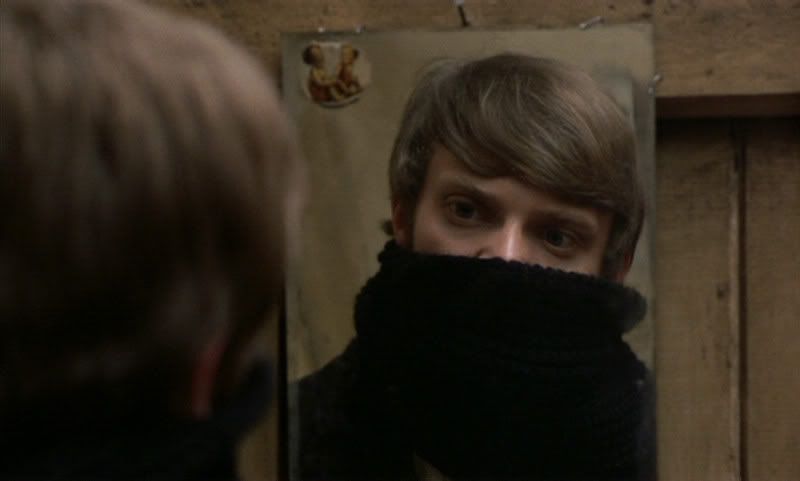
This surreal quality is playful and often anachronistic (one of the characters who dies suddenly reappears in the headmaster’s study, popping out of a cabinet to say a line of dialogue before lying back, corpse-like, as the drawer is shut upon him). The prefect’s wife takes off her clothes and roams freely through the empty hallways while everyone else is caught up in an occasion of pomp and circumstance. Mick and his friends have an elaborate fencing match, play-acting their way through it like the Three Musketeers until they are entranced by the appearance of “blood…real blood!” It all feels like part of existentialist shrink R.D. Laing’s once-popular belief that madness is the only sane response to an insane world.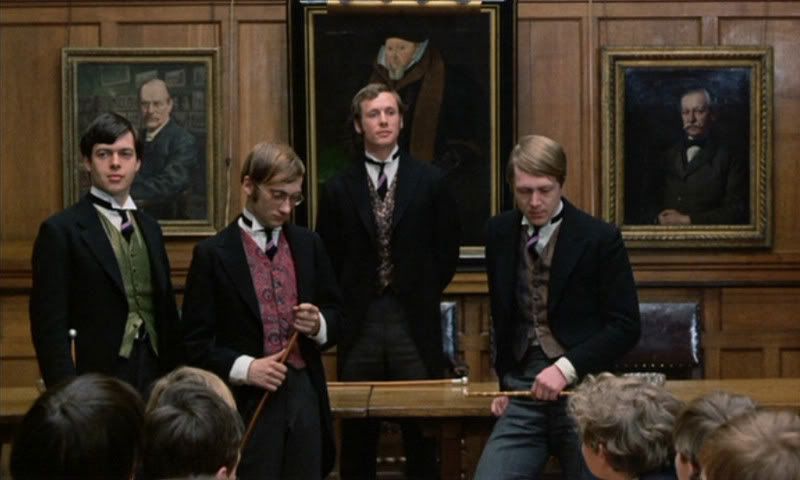
While the paddling doesn’t have the blood and spittle of The Passion of the Christ, it plays just as rough. Tension builds when Mick has to wait outside the gym and listen to the beating of two other boys, and then when he takes his twenty lashes we cut away to younger schoolchildren listening in fear as he has to take his lumps. The scene has incredible dramatic power as Mick wipes away a single tear and is called upon to thank his oppressors. This turning point in the film leads to the grand finale, where Mick and his revolutionaries utter no more spoken dialogue and somehow come across a cache of guns and hand grenades that they lethally break out when the parents visit the school on Founders’ Day. It is pure Guy Hawkes-style mayhem, again with a surrealist bent. (One of the villains gets shot in the head and immediately bursts into flame.)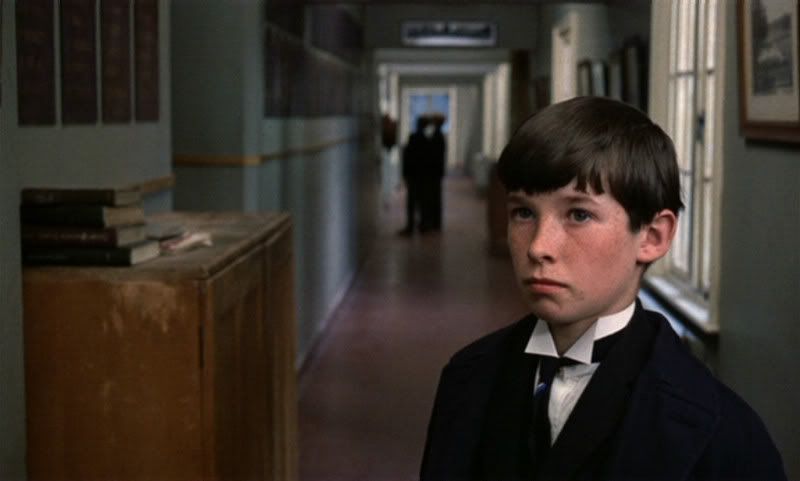
if… was wildly popular in Great Britain, a parallel reaction to the counterculture youth movement’s rage against the conservative regime, but it was equally embraced in countries that suffered under corrupt totalitarian governments. Nowadays, where global culture grows increasingly homogenized, we associate survival with conformity, and it’s refreshing to look back at this late-60s time capsule when young people violently disagreed with that notion. Naughty behavior and a taste for the ridiculous can be, in and of themselves, revolutionary—a refusal to adapt to constructed norms. Mick pushes it to the limit and, as reason and logic take a reprieve, the fantastic and the absurd take over.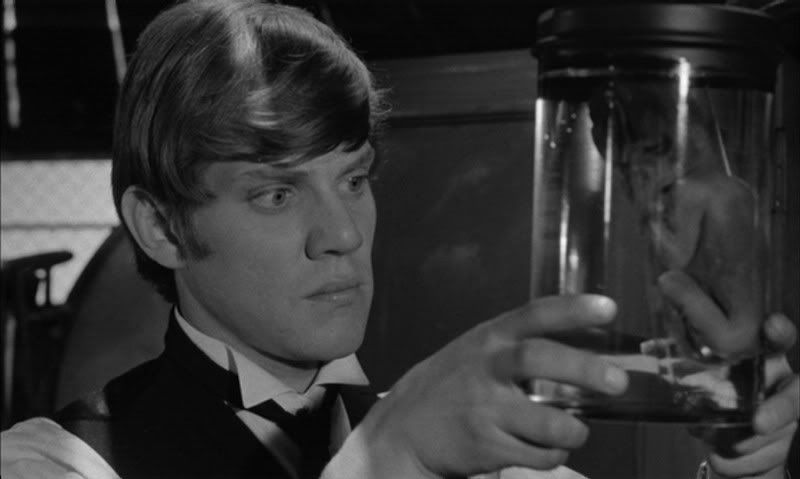
Disc Two contains a brief but lively interview with actor Graham Crowden, who plays the whimsical history teacher in if… and discusses Anderson’s paternal, supportive approach to actors. Anderson’s short, Academy Award winning documentary, Thursday's Children, about a school for deaf children, is a fascinating and humanitarian social document. An episode of BBC Scotland’s Cast & Crew has several crew members and Anderson’s protégé Stephen Frears discussing the long shadow if… has cast over the years—and a pre-taped Malcolm McDowell shares even more anecdotes, including the one where he asked Anderson if he could roll around on the floor naked with his co-star Christine Noonan, and his gleeful delight when the director agreed—o lucky man, indeed!
______________________________________________
Jeremiah Kipp's writing has appeared in Slant Magazine, Filmmaker, Fangoria and other publications.